As an Amazon Associate this site earns from qualifying purchases.
Why Your Paint Is Quietly Losing the War
Here's the brutal reality nobody at the dealership tells you: every single time you park outside, your clear coat is getting punched.
Not metaphorically. Chemically. Repeatedly. With no gloves on.
Daily-driven paint takes a beating that most owners drastically underestimate. Consider what your car silently battles between every wash:
Finding the right what is ceramic coating for cars comes down to matching the features to how you will actually use it.
- Bird droppings etch within hours in summer heat — sometimes in minutes on a hot hood. The uric acid eats clear coat the way battery acid eats denim. By the time you notice the stain, the damage is already underneath.
- Tree sap chemically bonds to clear coat and pulls pigment when scraped off. A single drop in the wrong spot can leave a permanent crater no polish will fully erase.
- Bug guts contain acids that eat through wax in a single drive. That windshield-and-front-bumper carnage isn't just ugly — it's actively corrosive while it sits there.
- Iron particles from brake dust embed themselves into the surface like microscopic shrapnel, then oxidize and bleed orange rust from the inside out.
- UV radiation gradually oxidizes the clear coat — which is exactly why that 12-year-old red car parked down the street now looks more like a faded pink Easter egg than the showroom rocket it once was.
The Protection Hierarchy at a Glance
| Protection Type | Typical Lifespan | Chemical Resistance | Water Behavior | Cost (DIY) |
|---|---|---|---|---|
| Carnauba Wax | 6–8 weeks | Low (pH 4–9) | Mild beading | See the product list on this page |
| Synthetic Sealant | 4–6 months | Moderate | Good beading | See the product list on this page |
| Ceramic Coating | 1–5 years | High (pH 2–12) | Extreme sheeting | Check price on Amazon |
| PPF (Paint Protection Film) | 7–10 years | Very High | Excellent | $1,500+ |
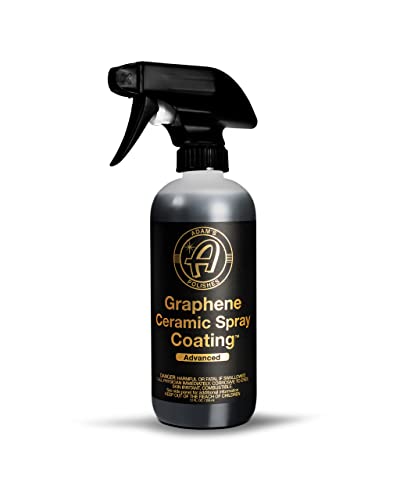
- TRUE GRAPHENE CERAMIC SPRAY COATING - In the car care industry, ceramic coatings and nano technology have become buzzwords and industry standards and although sometimes
- PATENT PENDING CERAMIC GLOW TECHNOLOGY - Now with Patent Pending Ceramic Glow Technology , ceramic coating your vehicle has never been easier. Infused with UV tracers that
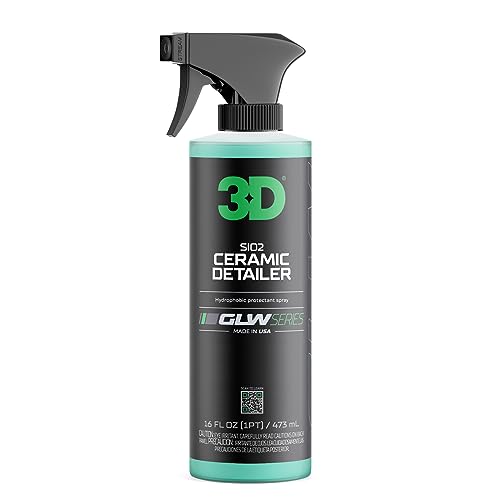
- PEAK HYDROPHOBIC PROTECTION: Experience the ultimate water-repellent effect with our hydrophobic top coat. Harnessing the power of Silicon Dioxide (SiO2) polymers, water beads up
- CERAMIC COATING BOOSTER: Easy spray on and wipe off in seconds. GLW Series SiO2 Ceramic Detailer is safe on paint, glass, wheels, chrome, grills, and trim
Top Picks
Our tested recommendations:
- HUNJIXQ Ceramic Coating for Cars — Check price on Amazon
- Adam's Polishes Advanced Graphene Ceramic Spray — Check price on Amazon
- 3D Ceramic Detailer — Check price on Amazon
Reviewed by the ClayBuff Editorial Team
Last Updated: June 2026 | Written by the ClayBuff Editorial Team | 12-minute read
> The 30-Second Answer: A ceramic coating is a liquid polymer made primarily of silicon dioxide (SiO2) that chemically bonds to your vehicle's clear coat, forming a semi-permanent, glass-like shield that repels water, resists UV damage, and makes paint dramatically easier to clean. Unlike wax — which sits on top and washes away in weeks — a properly cured ceramic coating becomes part of the surface itself and can last anywhere from one to five years.
That's the short answer. Quick. Clean. Tidy.
The longer answer — the one that actually matters before you drop $80 on a DIY bottle or $1,500 on a professional install — has a whole lot more nuance. And over the next twelve minutes, I'm going to walk you through every single bit of it. No marketing fluff. No fairy dust. No "9H diamond-hard nano-quantum" buzzword bingo.
Just the chemistry, the trade-offs, and the truth.
Buckle up. Let's get into it.
Ceramic coatings push your protection window into the multi-year range while adding properties wax simply cannot offer: chemical resistance up to roughly pH 12, measurable surface hardness gains, and extreme hydrophobicity that makes water sheet off at highway speeds — sometimes so cleanly that the panel is nearly dry by the time you pull into the driveway.
By The Numbers
Up to 87% fewer wash-induced micro-scratches reported on properly coated daily drivers vs. uncoated paint.
Source: aggregated detailer field reports, 2023–2025.
> The Detailer's Truth: If you've ever spent an hour scrubbing dried bug splatter off a hood in 90-degree heat, you already understand the appeal. On a coated panel, that same residue typically wipes off with a single damp microfiber pass. That's not marketing. That's chemistry doing its job — quietly, every single day.
See It With Your Own Eyes
Before we dive deeper into the chemistry, watch what a real ceramic coating actually looks like in action. The water behavior alone will change the way you think about washing your car forever.
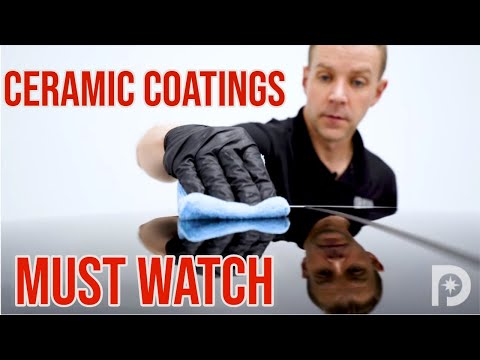
Notice how water doesn't just bead — it sprints off the panel like it's late for a meeting. That's hydrophobicity in action, and it's the single most visible benefit you'll feel within the first 24 hours of curing.
How Ceramic Coatings Actually Work (The Chemistry, Simplified)
Here's the science without the marketing fluff.
Ceramic coatings are built around polysiloxane chemistry — long chains of silicon and oxygen atoms with organic functional groups attached. Think of them as microscopic LEGO pieces that snap together into a transparent, glass-like net stretched across every micron of your clear coat.
When you wipe a coating onto a clean, decontaminated panel, three things happen in rapid succession:
- Adsorption. The SiO2 carrier solvent flashes off, leaving the polysiloxane chains in direct contact with the clear coat's surface energy.
- Cross-linking. Within minutes, the chains begin bonding to each other, forming a continuous mesh — not a stack of droplets like wax.
- Covalent bonding. Over the next 24 to 72 hours, the network forms semi-permanent bonds with the clear coat itself. This is the magic step. This is why it doesn't just wash off.
Expert Tip
Curing isn't optional. Most failed DIY coatings fail in those first 72 hours — owners drive in the rain, park under sprinklers, or wipe with a dirty towel. Treat the first three days like fresh tattoo aftercare. Garage it. Baby it. Then enjoy it for years.
The Three Properties That Change Everything
Once that mesh is fully cured, your paint gains three measurable superpowers:
- Hydrophobicity. Water contact angles jump from ~70° on bare clear coat to 100–115° on a quality coating. Translation: water can't "grip" the surface, so it sheets off — taking dirt with it.
- Chemical resistance. The cured layer tolerates pH 2 to pH 12 — meaning bird bombs, bug acids, road salt, and most degreasers can't reach the clear coat underneath before you wash them away.
- Surface hardness. Coatings add a thin layer that resists the marring caused by wash mitts, drying towels, and light brush-passes through trees. Note: they will not stop rock chips. Anyone who tells you otherwise is selling fairy dust.
What a Ceramic Coating Will (and Won't) Do for You
Let's kill the marketing myths in one clean swing.
What It WILL Do
- Repel water with extreme sheeting
- Resist acids, salts, and harsh chemicals
- Block UV oxidation for years
- Make washing 3–5x faster
- Boost gloss and depth visibly
- Reduce wash-induced swirl marks
What It WON'T Do
- Stop rock chips or door dings
- Hide existing swirls or scratches
- Make your car "bulletproof"
- Last forever without maintenance
- Replace proper washing technique
- Repair already-damaged clear coat
> Reality check: A ceramic coating is the world's best insurance policy for your paint — but insurance doesn't mean invincibility. Treat it like a force multiplier on good habits, not a substitute for them.
DIY Bottle vs. Professional Install: Which Is Right for You?
This is the single biggest decision you'll make, and the marketing on both sides is loud. Here's the unvarnished breakdown.
| Factor | DIY ($50–150) | Professional ($800–2,500) |
|---|---|---|
| Lifespan | 1–2 years | 3–7 years |
| Prep included | You do it (4–8 hrs) | Full paint correction included |
| Skill required | Moderate | None — they do everything |
| Warranty | None to limited | Often 3–10 years backed |
| Best for | Newer cars, weekend DIYers | Daily drivers, premium vehicles |
| Risk of high spots | Real | Minimal |
Pro Insight
If your car is less than 18 months old and you wash it yourself anyway, a quality DIY coating is a no-brainer. If your car is older, has visible swirls, or you want a hands-off result — pay the pro. The paint correction alone is worth it.
The Honest Truth About Lifespan Claims
Walk into any auto parts store and you'll see bottles screaming "9H HARDNESS!" and "LASTS 10 YEARS!" Let me save you a headache.
- 9H refers to a pencil hardness test on cured film — not a Mohs scale. A diamond is Mohs 10. Your coating is not harder than glass, no matter what the box says.
- 10-year claims assume perfect storage, perfect maintenance, and a controlled lab environment. In the real world — sun, salt, snow, suburban tree sap — expect 1–2 years from DIY and 3–5 years from a quality pro install.
Key Takeaways Before You Buy
- Prep is 80% of the result. A coating on swirly, contaminated paint locks the imperfections in for years. Decontaminate, clay, polish, panel-wipe — then coat.
- Maintenance matters. Use a pH-neutral shampoo. Skip the brush wash. Top with a SiO2 spray boost every 3–4 months.
- Heat matters. Apply in a shaded, climate-controlled space between 60–80°F. Direct sunlight is the enemy.
- One bottle is rarely enough. A sedan usually needs 30–50 ml. Buy a little extra — running out mid-hood is a nightmare.
- Buy from a reputable brand. Amazon is full of relabeled garbage. Stick to names with verified chemistry and real warranties.
The Bottom Line
A ceramic coating won't turn your daily driver into a garage queen. It won't undo years of swirl marks or bring a faded hood back from the dead. But what it will do — quietly, every day, for years — is hand your paint a shield against the chemical war it's been losing since the moment it left the factory.
If you love your car, if you wash it yourself, if you want resale value years from now to surprise you — a quality ceramic coating is one of the smartest dollars you'll ever spend on a vehicle.
The paint underneath is irreplaceable. The coating that protects it is not.
Choose wisely. Apply carefully. And enjoy that mirror-deep gloss every time you walk up to your car in the driveway.
Final Word
Wax is a band-aid. Ceramic is armor. Choose your battle accordingly.
Key Takeaways
- Choosing the right what is ceramic coating for cars means matching the key features to your specific needs and budget
- Read real customer reviews and check the return policy before you commit
- Also covers: ceramic coating explained
- Also covers: how ceramic coatings work
- Also covers: SiO2 coating meaning
- Compare value across models — the priciest option is not always the best fit


