As an Amazon Associate this site earns from qualifying purchases.
Top Picks
Our tested recommendations:
- Adam's Advanced Graphene Ceramic Coating — Check price on Amazon
- HUNJIXQ Ceramic Coating for Cars — Check price on Amazon
- Hatinix 20H Graphene Ceramic Coating — Check price on Amazon
Reviewed by the ClayBuff Editorial Team
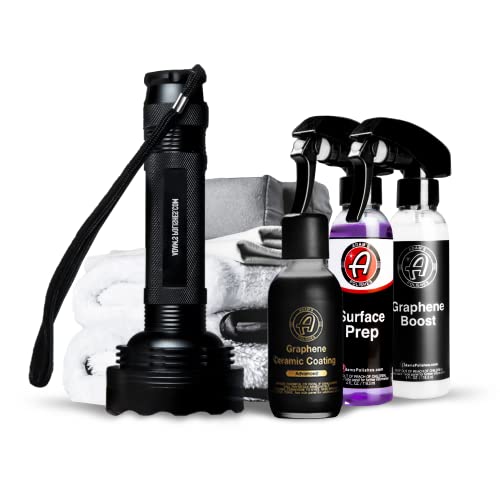
- THE NEXT GENERATION OF PROTECTION FOR YOUR ENTIRE VEHICLE! Adam’s UV Graphene Ceramic Coating is a clear, nanocrystalline coating that protects your vehicle from weather
- PATENT PENDING UV TRACING TECHNOLOGY! Infused with patent-pending Ceramic Glow Technology. This feature acts as an application aid allowing users or professionals the ability to
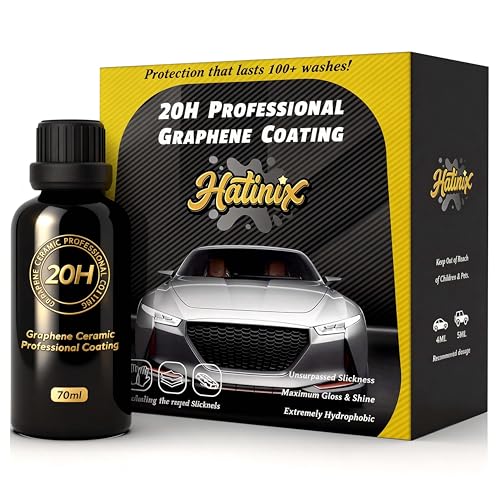
- 10-Year Durable Shield: Advanced ceramic coating with superior hardness protects against UV, chemicals, and oxidation
- Graphene CeramicTechnology: 82% Active Content. Delivers superior hydrophobicity and contaminant resistance beyond standard coatings
Ceramic Coating vs. Wax vs. Sealant
| Feature | Carnauba Wax | Paint Sealant | Ceramic Coating |
|---|---|---|---|
| Lifespan | 4 to 8 weeks | 4 to 6 months | 2 to 5 years |
| Hydrophobic Power | Mild beading | Solid beading | Water sprints off |
| UV Protection | Minimal | Moderate | Excellent |
| Chemical Resistance | Low | Medium | High |
| Gloss Boost | Warm, classic | Crisp, modern | Deep, wet, glass-like |
| Cost (DIY) | $15 to $40 | $20 to $50 | $60 to $250+ |
Last Updated: June 2026 | Written by the ClayBuff Editorial Team
What Is a Ceramic Coating? (The Straight Answer)
Picture this: rain hits your hood and instantly beads up into shimmering little marbles that race off the side, taking dust, pollen, and yesterday's grime with them. That is not a car commercial. That is a properly coated vehicle on a Tuesday.
A ceramic coating is a liquid polymer — typically built on silicon dioxide (SiO2) or silicon carbide (SiC) — that you apply to a vehicle's clear coat, where it chemically bonds to form a semi-permanent, glass-like protective layer.
Once cured, this invisible armor:
- Repels water like a freshly waxed raincoat in a thunderstorm
- Resists UV damage that quietly fades and oxidizes unprotected paint
- Makes washing dramatically easier — sometimes embarrassingly so
- Locks in depth and gloss that turns heads in parking lots
That is the headline. The reality? It is more nuanced. Ceramic coatings are genuinely excellent. They are not the bulletproof miracle that YouTube ads love to promise.
Let's get into what's actually true.
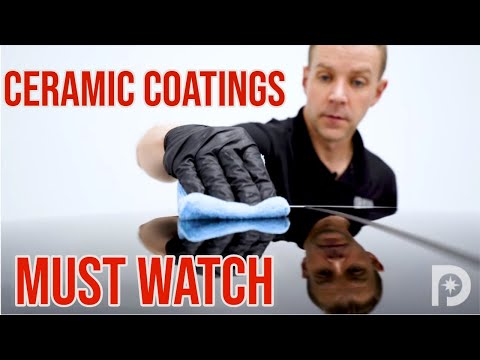
See It In Action: Ceramic Coating Explained
Words can only do so much when it comes to that jaw-dropping water-beading moment. Here is a quick visual primer that captures exactly what a real coating does the second water hits the surface:
How Ceramic Coating Works (The Chemistry, Simply)
Here is the thing most beginner guides skip entirely: ceramic coatings do not just coat the paint — they form a covalent bond with it.
When the SiO2 solution hits a properly prepped clear coat, it cross-links into a rigid, hydrophobic matrix as the solvent flashes off. That microscopic lattice is what gives you the legendary water beading, the slick "glass" feel, and the ability to laugh off bird droppings that would normally etch your paint within hours.
- Prep — Wash, decontaminate, clay, and (often) polish until the paint is surgically clean.
- Apply — Spread the coating in small sections with a suede applicator, then watch it "rainbow" as it flashes.
- Cure — Wipe to a streak-free finish and let the chemistry harden over 24 to 48 hours.
> Bottom line: Wax is a t-shirt. Sealant is a windbreaker. Ceramic coating is a tailored, weatherproof overcoat — one that happens to make your paint look like it just rolled off the showroom floor.
What a Ceramic Coating Actually Protects Against
Let's be brutally honest about what this stuff can and cannot do.
- UV fade and oxidation
- Bird droppings (if rinsed promptly)
- Tree sap and bug guts
- Water spots and mineral staining
- Light chemical contaminants
- Stop rock chips on the highway
- Prevent swirl marks from bad wash habits
- Heal existing scratches or paint damage
- Replace paint protection film (PPF)
- Make your car physically scratch-proof
DIY vs. Professional Coating: Which One Should You Choose?
This is the question that haunts every car enthusiast at 1 a.m. on a Tuesday. The honest answer? It depends entirely on your patience, your prep skills, and your appetite for spending a Saturday on your knees with a microfiber towel.
DIY Coatings ($60 to $150): Affordable, fun, and shockingly effective if you nail the prep. Expect 1 to 3 years of durability and a weekend of work.
Professional Coatings ($600 to $2,500): Multi-layer systems, paint correction, climate-controlled curing, and 5+ year warranties. The look is on another planet — and so is the price.
Key Takeaways: What Beginners Need to Remember
- Prep is everything. A coating only locks in what is underneath it. Polish out swirls first or you will lock them in for years.
- Hydrophobic is not invincible. You still need to wash — just way less often, and way more easily.
- The 9H scale is pencil hardness, not Mohs. Marketing loves to blur that line. Your coating is hard, not diamond-hard.
- Maintenance matters. Use pH-neutral shampoo, two buckets, and a quality wash mitt. Skip automatic brush washes forever.
- Expect honest results. Insane gloss, slick water behavior, and easier upkeep. Not force fields.
The Final Word
Ceramic coatings are one of the most genuinely impressive upgrades you can make to a vehicle — not because they perform miracles, but because they deliver consistently, visibly, and for years. The water beads. The paint glows. Washing turns into something closer to rinsing.
Go in with realistic expectations, respect the prep work, and you will join the camp of car owners who quietly grin every time it rains. Skip the prep, believe the hype, and you will end up disappointed by a product that was never going to live up to a marketing fantasy.
The truth is somewhere in the middle — and the middle is still really, really good.
Key Takeaways
- Choosing the right what is ceramic coating means matching the key features to your specific needs and budget
- Read real customer reviews and check the return policy before you commit
- Also covers: ceramic coating explained
- Also covers: how ceramic coating works
- Also covers: ceramic coating benefits
- Compare value across models — the priciest option is not always the best fit


