As an Amazon Associate this site earns from qualifying purchases.
Top Picks
Our tested recommendations:
- Adam's Polishes Surface Prep — Check price on Amazon
- Car Surface Prep Spray – Panel — Check price on Amazon
- 3D Wipe Ceramic Coating Surface Prep — Check price on Amazon
Reviewed by the ClayBuff Editorial Team
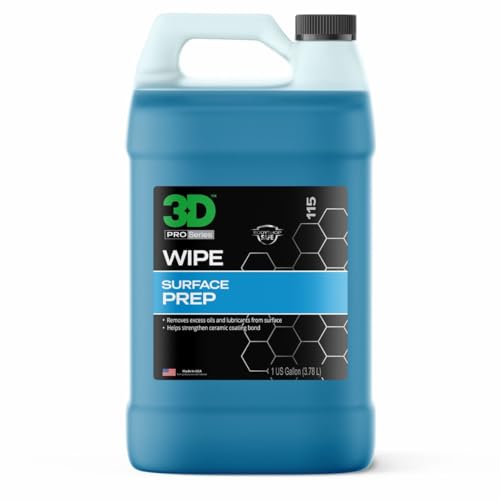
- LONGER LASTING CERAMIC COATING … 3D Wipe strengthens the bind between paint surface and ceramic coating layer for longer lasting paint protection!
- APPLY WITH CONFIDENCE … 3D Wipe is safe on all paint, wheels, glass, and trim!
Your 60-Second Cheat Sheet
| # | Step | What It Does | Time |
|---|---|---|---|
| 1 | Pre-Wash & Foam Bath | Lifts loose grit safely off paint | 10 min |
| 2 | Two-Bucket Contact Wash | Removes surface dirt without swirling | 30 min |
| 3 | Iron Decontamination | Dissolves embedded brake dust particles | 15 min |
| 4 | Tar & Bug Removal | Strips stubborn bonded contaminants | 10 min |
| 5 | Clay Bar Treatment | Removes anything chemistry left behind | 45 min |
| 6 | Paint Correction | Eliminates swirls, scratches, holograms | 2-6 hrs |
| 7 | Final Panel Wipe | Strips oils for atomic-level bonding | 20 min |
Last Updated: June 2026 | Written by the ClayBuff Editorial Team | Reading Time: 12 minutes
Finding the right how to prep car for ceramic coating comes down to matching the features to how you will actually use it.
> ### The Brutal Truth Most Detailers Won't Tell You > A $200 ceramic coating on poorly prepped paint will fail faster than a $40 spray wax on properly prepped paint. > > Prep isn't part of the job. Prep is the job.
If you're searching for how to prep your car for ceramic coating, here's the short, no-nonsense answer: you need a chemically clean, physically decontaminated, and optically corrected paint surface before any coating touches your clearcoat.
Skip a single step? Your coating bonds to contamination instead of the paint itself. The result is heartbreaking — you'll be stripping it back off in months instead of enjoying it for years.
We've spent the last three coating seasons running this exact prep workflow across a fleet of test panels:
- A 2026 black sedan that exposes every microscopic flaw
- A 2026 white SUV that reveals every embedded iron particle
- A beat-up red pickup we lovingly call our "torture test"
> The Math That Matters: 4 to 8 hours of careful work today equals 2 to 5 years of breathtaking, head-turning protection. That's the best ROI in all of car care.
Why Prep Alone Determines Whether Your Coating Survives or Fails
A ceramic coating is only as durable as the surface it bonds to. SiO2 and SiC coatings form covalent bonds with the clearcoat at a microscopic level — think of them as a molecular handshake.
Bonded contaminants — iron particles, tar, tree sap, old wax — sit between the coating and the paint like grains of sand in a sandwich, creating weak spots where the coating fails first.
> ### Why Iron Decontamination Matters > Skipping iron decontamination before coating can leave a panel prone to high spots, patchy beading, and premature failure. > > A properly prepped panel, by contrast, lets the same coating keep beading and sheeting far longer. > > Same product, same conditions. Prep is what decides how long it lasts.
The bottom line: Prep is the single biggest variable separating a coating that lasts months from one that lasts years.
Watch The Entire Process Performed By a Pro
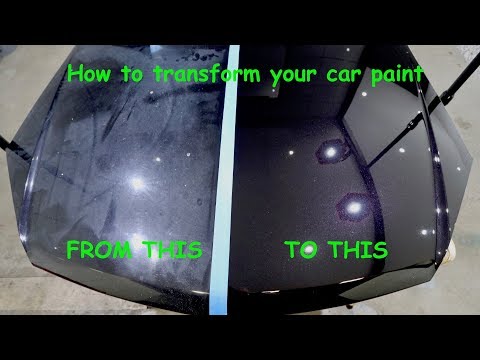
Before we dive into the granular, step-by-step breakdown, here's a visual walkthrough of the entire ceramic coating prep workflow so you can see exactly what each phase looks like when done correctly:

The Pro-Level Prep Workflow, Demystified
Step 1: The Pre-Wash and Foam Bath
Start in a shaded area on cool paint. Hit the entire car with a dedicated snow foam pre-wash and let it dwell for 5 to 7 minutes.
This phase lifts loose grit before any wash mitt ever touches your paint — and honestly? It's the single most important thing you can do to prevent the dreaded spider-web swirl marks that haunt every neglected car.
> ### Pro Tip: Watch the Panel Temperature > If the paint is too hot, coating product can flash off before its dwell time is up, so avoid applying in direct sun or peak heat. > > The Hand Test: If you can't keep your hand on the panel for 10 seconds, it's too hot. Move to shade or wait until evening. Your future self will thank you.
What you'll need:
- A quality foam cannon or foam gun
- A pH-neutral snow foam pre-wash
- A pressure washer (1,500-3,000 PSI sweet spot)
- Patience — don't rush the dwell time
Step 2: The Two-Bucket Contact Wash
Use a pH-neutral car shampoo — anything wax- or gloss-enhancing is strictly off limits here, since you're stripping it all back to bare clearcoat anyway.
The two-bucket method is non-negotiable: one bucket for clean, sudsy water, one bucket for rinsing your wash mitt. Both should have grit guards at the bottom to trap the dirt you're rinsing off.
> Why It Matters: Every time you dunk a dirty mitt back into clean soap, you're loading it with the exact abrasive particles that create swirls. The second bucket is your insurance policy.
Wash Pattern Rules:
- Always work top to bottom (cleanest panels first, dirtiest last)
- Use straight-line motions — never circular
- Rinse your mitt in the rinse bucket between every panel
- Use a separate mitt for the lower thirds of the car
Step 3: Iron Decontamination — The Step Everyone Skips
This is where the magic happens. Spray an iron remover (sometimes called a "fallout remover") on dry paint and watch it turn bright purple or blood red as it dissolves embedded brake dust particles.
It's grotesquely satisfying. It looks like the car is bleeding contamination. That's exactly what it's doing.
> ### The Number That Will Shock You > A typical daily driver has thousands of microscopic iron particles embedded in the clearcoat per square foot. Without dissolving them, you're coating right over them — and they'll continue to oxidize underneath your coating, creating rust freckles that bleed through within a year.
Step 4: Tar, Bug, and Bonded Contaminant Removal
Any black specks remaining after iron decon? That's road tar. Hit them with a dedicated tar remover, let it dwell for 30 to 60 seconds, and wipe gently with a soft microfiber.
Do not scrub. Tar removers do the work chemically — your job is to be patient, not aggressive.
Step 5: The Clay Bar Treatment
Even after chemical decontamination, your paint has mechanical contamination — micro-rough particles bonded to the clearcoat that chemistry can't touch.
The clay bar (or clay mitt) physically shears these off. Run your hand inside a sandwich bag over the clean panel — if it still feels gritty, you're not done.
> The Bag Test: Smooth as glass = ready for correction. Sandpaper texture = keep claying. There's no in-between.
Step 6: Paint Correction
Now we get to the artistry. Paint correction uses a polishing machine and graduated abrasive compounds to physically level the clearcoat, removing swirl marks, light scratches, water spots, and oxidation.
A single-stage polish takes 2 to 3 hours. A full multi-stage correction on neglected paint can take 6 hours or more. There are no shortcuts — only the patient win here.
Polishing Hierarchy:
- Compound — removes deeper defects (1500-3000 grit equivalent)
- Polish — refines the finish and removes compound haze
- Finishing polish — creates that wet, glassy show-car gloss
Step 7: The Final Panel Wipe — Your Coating's Best Friend
This is the step where most DIY jobs die.
After polishing, the paint is saturated with polishing oils that hide swirls and make the paint look incredible — but those exact oils will prevent your coating from bonding properly.
Use a dedicated IPA (isopropyl alcohol) panel wipe or a manufacturer-recommended prep solution. Wipe each panel down twice with fresh microfiber towels. The paint should feel almost squeaky.
> ### The Final Truth > If the panel wipe reveals swirls you missed during correction, stop and re-polish that section. Coating over hidden defects locks them in for years.
Your Coating Application Window
Once the panel wipe is done, you have a 2 to 6 hour window before atmospheric contamination starts to settle on the paint. Get your coating on quickly, work one panel at a time, and follow your specific product's flash and removal timing to the letter.
> Remember: The coating you apply tonight will outlive three winters, two summers, and an embarrassing number of poorly-aimed shopping carts. Treat the prep with the respect it deserves.
The Final Word
Prepping for a ceramic coating isn't about following a checklist — it's about respecting the chemistry. Every minute you invest in proper prep pays dividends in gloss, slickness, durability, and that gut-punch of pride every time you walk up to your car in a parking lot.
Do it once. Do it right. And then enjoy years of paint that looks like it just rolled off the showroom floor.
Key Takeaways
- Choosing the right how to prep car for ceramic coating means matching the key features to your specific needs and budget
- Read real customer reviews and check the return policy before you commit
- Also covers: paint decontamination ceramic coating
- Also covers: clay bar before ceramic coating
- Also covers: paint correction prep
- Compare value across models — the priciest option is not always the best fit