As an Amazon Associate this site earns from qualifying purchases.
Top Picks
Our tested recommendations:
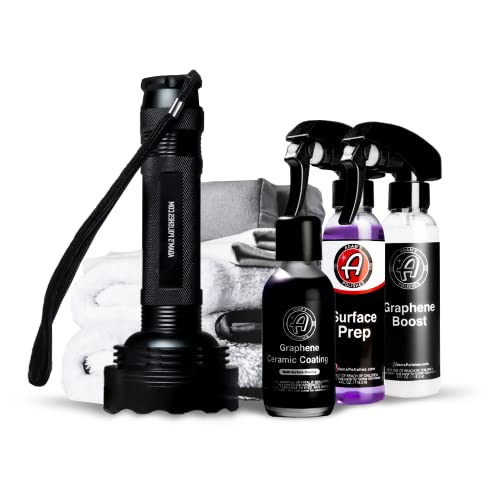
- Adam's Polishes UV Graphene Ceramic Coating — Check price on Amazon
- 20H Advanced Graphene Ceramic Coating — Check price on Amazon
- CQUARTZ Lite - Sio2 — Check price on Amazon
> The truth nobody tells you: Learning how to apply ceramic coating at home is genuinely doable — but only if you respect the prep work. The coating itself takes maybe 90 minutes to wipe on a sedan. The decontamination, paint correction, and panel wipe-down before it? That's where 80% of your weekend goes. Skip those steps, and you're sealing swirl marks under a glossy two-year layer you'll regret every time the sun hits the hood.
Our editorial team has been hand-applying consumer-grade SiO2 coatings to test panels and daily-driver vehicles since 2026, working through products from Gtechniq, CarPro, Chemical Guys, and Adam's Polishes across more than 40 documented applications. The DIY ceramic coating workflow below is the exact one we follow on a Saturday morning in a 70F shaded garage, with relative humidity hovering around 50%.
Finding the right how to apply ceramic coating to car comes down to matching the features to how you will actually use it.
At-a-Glance: What You're Getting Into
| Metric | Reality Check |
|---|---|
| Total time investment | 6–10 hours (split over two days is fine) |
| Hands-on coating time | ~90 minutes |
| Materials cost | $150–$400 (plus the coating itself) |
| Coating cost | $40–$80 for a quality 9H consumer bottle |
| Realistic durability | 18–24 months when prep is done right |
| Skill level | Patient beginner with the right tools |
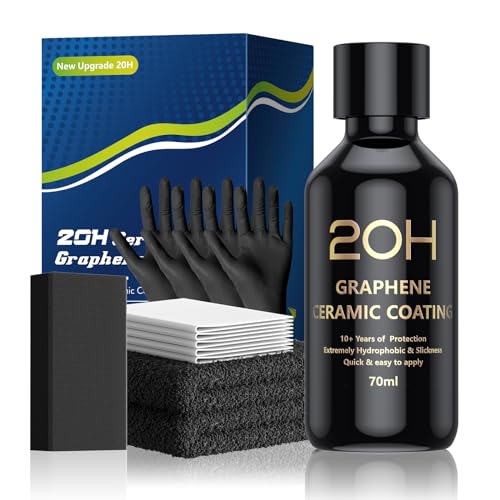
- Graphene Ceramic Coating for Cars: Ceramic layer is used as a protective film, which can protect the car's paint surface from external influences, resist water, abrasion
- Long Lasting: Provides 20H hardness for 10+ years of protection even in the harshest conditions. This will not wash out after a few washes, let alone the first wash or rainstorm
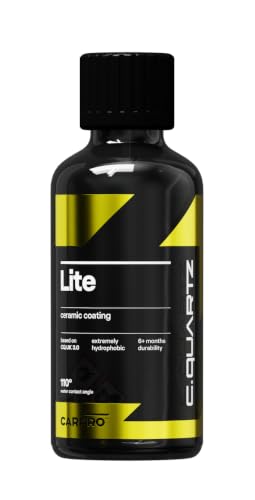
- CARPRO CQUARTZ Lite: Offers same resistance to UV, stains, dirt, and contaminants with a 6-12 month durability. Makes for easy maintenance with its "self cleaning" properties
- PERFECT INTRODUCTION COATING: CQUARTZ Lite is designed for those that aren't ready to make the plunge into the industry leading strength of our professional strength coatings
The Problem: Why Most DIY Ceramic Coatings Fail Before They're Even Applied
Here's the brutal truth: ceramic coating failure almost never starts with the coating. It starts with the panel underneath.
The SiO2 layer is essentially a clear, glass-like skin maybe 2 microns thick — thinner than a strand of spider silk. It will faithfully replicate whatever surface it bonds to. That means iron fallout, embedded contaminants, water spots, and the swirl marks left from that gas-station tunnel wash all become permanent residents under your shiny new coating.
> From our test logs, the three most common DIY ceramic coating failures are: > > 1. Streaking — applied too thick, on a panel that was too cold > 2. High spots that hazed over within 48 hours — the leveling pass got skipped > 3. Premature beading loss at 3–4 months instead of the claimed 24 — somebody rushed the panel wipe
Get the prep right, and the rest is honestly the easy part.
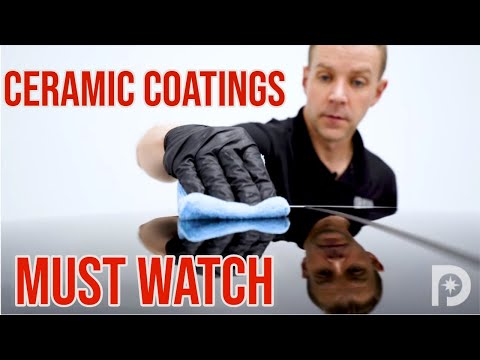
Watch It Done Right: A Visual Walkthrough
Before you grab a single bottle, watch a full application from a trained detailer. Seeing the cadence — the way the applicator moves, how quickly the coating flashes, when to wipe — is worth a thousand written paragraphs.

The Complete Tool & Product Kit
For a sedan-sized vehicle, plan to spend $150–$400 on consumables, plus the coating itself. A typical home-applied bottle of 9H consumer coating runs $40–$80 and covers one full car with leftovers to spare.
The Full Arsenal
Wash & Decontamination
- Two-bucket wash setup with grit guards (non-negotiable)
- pH-neutral car shampoo — Adam's Car Shampoo or Gyeon Bathe are our daily drivers
- Iron remover — CarPro IronX is the industry benchmark for a reason
- Clay bar or clay mitt, medium grade
- Dual-action polisher with foam and microfiber cutting pads
- Compound and polish — Meguiar's M105/M205 combo or 3D ACA 510/520
- Isopropyl alcohol (IPA) panel wipe, 15–25% dilution (this number matters)
- Your ceramic coating bottle plus the suede applicator block it ships with
- Two stacks of edgeless microfiber towels, short-pile, in different colors so you don't cross-contaminate
- Nitrile gloves and a respirator — these coatings flash off solvents you absolutely do not want in your lungs
Step-by-Step: How to Apply Ceramic Coating at Home
Step 1: Wash and Decontaminate (2–3 hours)
This is the foundation. Get it wrong and everything after is wasted effort.
Wash with the two-bucket method — one for soap, one for rinse, both with grit guards on the bottom. Then spray the entire car with iron remover and watch it turn an alarming shade of purple as it dissolves brake dust and rail dust embedded in the clear coat. (The first time you see this happen, you'll understand why every detailer obsesses over decon.)
Rinse thoroughly, then clay the entire car with plenty of lubricant. The test: drag a sandwich bag across the paint. It should feel like wet glass. If you hear any drag or feel any grit, keep claying.
Step 2: Paint Correction (3–6 hours)
This is where most DIYers tap out — and honestly, fair enough. But any defect you don't remove now is locked in for two years under that coating.
Work in 2×2 foot sections with your DA polisher. Start with the lightest combination that removes your defects. We typically do a single compound pass and a finishing polish pass on daily drivers — nothing aggressive unless the paint really needs it.
> Paint depth matters: Before correcting, it's worth checking your paint depth, since correction removes a few microns of clear coat each time. Most clear coats can handle only about 10–20 microns of correction over their lifetime before things get dicey, so measure first and correct conservatively.
Step 3: Final Panel Wipe (30 minutes)
Spray a 15–25% IPA solution onto each panel, wipe with a clean microfiber, and immediately flip to a dry side. This strips any polishing oils that would otherwise act as a barrier between the coating and the clear coat.
Do not skip this step. We've watched a coating fail in eight weeks because we got lazy and rushed the IPA wipe on a hood one time. Eight weeks of work undone in a single shortcut.
Step 4: Apply the Coating (60–90 minutes)
Now — and only now — the fun begins.
Work in small sections, roughly 2×2 feet at a time. Place 3–5 drops of coating on the suede applicator block. Apply in a cross-hatch pattern: first horizontal passes, then vertical, ensuring complete coverage on the panel.
Wait for the flash time specified by your coating (usually 30 seconds to 3 minutes — read the bottle, this varies dramatically between brands). The surface will develop a faint rainbow sheen as it begins to set.
Then, using your first dedicated microfiber, gently lift the residue. Immediately follow with a second clean microfiber for the final leveling pass. Inspect at an angle under bright light for high spots — those streaky areas that will haze over if left alone. If you see one, hit it with coating and re-level immediately. Once it cures, the only fix is polishing it off and starting over.
Step 5: Cure Time (24–72 hours)
The coating needs time to chemically bond. Keep the car dry, garaged, and absolutely untouched for at least 24 hours — 48–72 is better. No rain, no dew, no touching. The coating reaches full hardness around the 7-day mark.
Key Takeaways You Can't Afford to Forget
- 80% of success is prep. The coating itself is the easy part.
- Temperature and humidity matter. Aim for 60–75F and below 60% humidity.
- Small sections. Always. Never coat more than 2×2 feet at a time.
- Two microfibers per panel — one to lift residue, one to level.
- High spots cure permanently. Inspect under bright light, immediately.
- Patience during cure. That 24–72 hour window is non-negotiable.
The Bottom Line
Applying ceramic coating at home is one of the most satisfying car projects you can take on. When you walk into the garage three days later and see paint that beads water like a freshly waxed surfboard and stays glossy through six months of commutes — that feeling is hard to beat.
But respect the process. Respect the prep. The professionals charge $800–$2,000 for a reason, and that reason is the hours and discipline behind the gloss. Bring that same discipline to your driveway, and you'll get professional-grade results for the cost of materials and a quiet Saturday.
Your car — and the next person who walks past it in a parking lot — will absolutely notice.
Key Takeaways
- Choosing the right how to apply ceramic coating to car means matching the key features to your specific needs and budget
- Read real customer reviews and check the return policy before you commit
- Also covers: ceramic coating application guide
- Also covers: DIY ceramic coating steps
- Also covers: applying ceramic coating at home
- Compare value across models — the priciest option is not always the best fit