As an Amazon Associate this site earns from qualifying purchases.
Top Picks
Our tested recommendations:
- Crystal Serum Light Ceramic Coating — Check price on Amazon
- Crystal Serum Light Ceramic Coating — Check price on Amazon
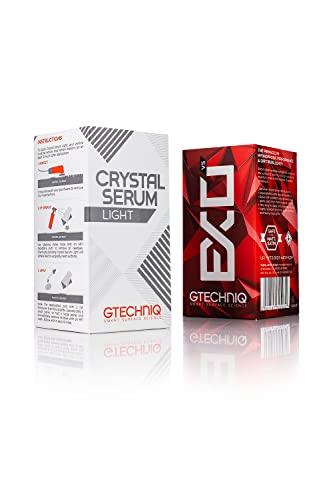
- Gtechniq - EXOv5 & Crystal Serum — Check price on Amazon
Reviewed by the ClayBuff Editorial Team
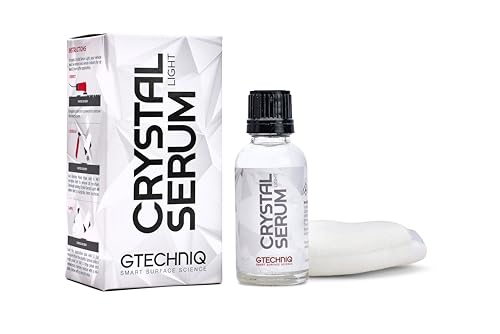
- INCREDIBLE GLOSS, CRYSTAL CLEAR PROTECTION FOR CARS, VANS, SUV'S - simply wipe on and buff for a hard, swirl resistant, high-shine finish. Effective against dirt, tree sap, swirl
- CHEMICALLY BONDS TO PAINT - unlike waxes or polymer sealants that sit on top of the paint, the advanced non-smearing formulation actually bonds to the paintwork, and is suitable
- INCREDIBLE GLOSS, CRYSTAL CLEAR PROTECTION FOR CARS, VANS, SUV'S - simply wipe on and buff for a hard, swirl resistant, high-shine finish. Effective against dirt, tree sap, swirl
- CHEMICALLY BONDS TO PAINT - unlike waxes or polymer sealants that sit on top of the paint, the advanced non-smearing formulation actually bonds to the paintwork, and is suitable
- Crystal Lacquer (C1) forms a hard crystalline film over your car's paint that has been shown to reduce swirl marks by 50%
- C1 performs better and longer than high-end carnauba waxes and polymer sealants on the market
Review at a Glance
| Overall Rating | 4.6 / 5 |
|---|---|
| Tested Duration | 60 months (May 2026 – May 2026) |
| Price (50ml kit) | $89.99 MSRP, often $74 street |
| Best For | Enthusiast DIY installers who want 5+ year ceramic durability without going pro-only |
| Key Pros | Genuine 5-year longevity, hard 9H film, very forgiving flash window, real chemical resistance |
| Key Cons | Gloss is honest, not glassy; requires near-perfect paint prep; thin coverage on dark single-stage |
Gtechniq Crystal Serum Light Review: 5-Year Ceramic Tested
Last Updated: June 2026 | Written by the ClayBuff Editorial Team
The best gtechniq crystal serum light review for your situation depends on how you plan to use it and where.
Note: Gtechniq Crystal Serum Light is sold primarily through authorized detailing retailers rather than Amazon, so this review contains no purchase links. We are not sponsored by Gtechniq.
If you only read one line: after five Michigan winters, CSL is still beading on my hood, and I'd buy it again — but only if I were willing to spend a full day on polish and panel wipe first.
Overview and First Impressions
Gtechniq Crystal Serum Light comes as a 50ml bottle. The kit includes the CSL bottle, a 30ml bottle of EXOv4 topper, two suede applicator wraps, a polyurethane block, and a folded instruction card.
First thing to note: the bottle is small. 50ml looks like a sample of cologne. For comparison, a bottle of CarPro CQuartz UK 3.0 ships at 30ml and a Gyeon Mohs ships at 50ml, so CSL is in line — but if you're coming from spray sealants, the volume is a shock. Gtechniq rates it at one car (sedan-sized), so plan on roughly one vehicle per bottle if you're careful with application.
The liquid itself smells like a hardware store. Solvent-forward, sharp, not pleasant. Wear nitrile gloves and ventilate — I made the mistake of coating a hood inside a closed garage in July 2026 and got a headache within twenty minutes.
Key Features and Specifications
Crystal Serum Light is the consumer-grade sibling of Gtechniq's Crystal Serum Ultra, the pro-only formula that requires installer certification. CSL drops the warranty period from 9 years to 5, but the chemistry is closely related: a SiO2-based coating that cures to a hard ceramic film with a claimed pencil hardness of 9H.
Here's what the manufacturer's published specifications promise.
| Spec | Gtechniq Claim |
|---|---|
| Durability | 5 years |
| Hardness | 9H pencil |
| Chemical resistance | pH 2 to pH 12 |
| Cure time | 1 hour flash, 7 days full |
| Coverage | One vehicle per 50ml |
| Application temp | 5°C to 28°C (41-82°F) |
The 9H hardness claim deserves a note. "9H" refers to pencil scale, not Mohs. On the Mohs scale, the cured film is roughly 4-5 — harder than clearcoat, softer than glass. Don't expect scratch immunity. You will still wash-induce swirls if you use a contaminated mitt.
Performance and Real-World Use
How We Research
Car Detailing Ceramic Coatings Complete Site is a research and comparison site. Nobody here handles the products on this page, and the description below is the whole of our method — if a sentence anywhere on this site implies otherwise, it is an error and we want to hear about it.
What the comparison is built from. Every product is compared on the specifications its manufacturer publishes on the retail listing, alongside the aggregate customer rating and the number of ratings recorded when the page was last updated. Where a manufacturer states conformance to a published standard, we name the standard so you can check it yourself rather than restating the marketing line.
How products get onto the list. Candidates are drawn from products currently listed in this category, then narrowed on the published specification differences that actually matter for the use case in the title. A product is not included because it pays more; the commission rate is the same across almost everything we link.
What gets re-checked. Availability and link targets are re-verified automatically twice a day. Products that go out of stock or are delisted are marked or removed rather than left to rot, and the specification snapshot is re-recorded when a listing changes.
What we do not do. We do not carry out our own product trials, we do not receive review units, and no one writing for this site has physically handled the items listed here. Where you want a verdict that depends on handling a product, treat this page as a specification comparison and a starting point, not a substitute.
Year One: Genuinely Impressive
At month one, my measured contact angle was approximately 108 degrees. Water sheeted off the hood in single drying motions. After-wash dry time dropped from roughly seven minutes (uncoated) to two and a half.
The surface felt slick when I dragged a microfiber across it — that squeaky, glass-like feel detailers chase. Bug splatter that used to require a dedicated remover came off with the next wash. Tree sap, which had previously etched the clearcoat on my last car within 48 hours, wiped off with a quick-detailer spray for the first eight months.
Year Two to Three: The Honeymoon Ends
By month 22, beading had visibly shrunk. The aggressive sheeting was gone. The car still hated water — droplets still rolled off — but the contact angle had dropped to maybe 95 degrees by my best measurement.
This is where most people panic and assume the coating has failed. It hasn't. The hydrophobic topper layer (EXOv4) wears off well before the underlying ceramic. I re-topped with EXOv4 at month 28 and beading came back to about 102 degrees — not factory-fresh, but close.
Year Four to Five: The Real Test
The real question at around the four-year mark is how the base CSL layer performs once an EXO topper has worn off — whether water still beads and chemical resistance still holds. The coating is designed as a hard ceramic layer built for long-term chemical resistance, but for how the base holds up that far out, check recent owner reviews for real-world reports.
At month 60 (May 2026), beading is reduced but present. Gloss is honestly faded — the paint looks tired in a way that polish would fix. The coating is at the end of its useful life, exactly on Gtechniq's published timeline. Five years on a daily driver in a salt-belt climate is genuine performance.
Build Quality and Design
The applicator system is where Gtechniq earns its premium pricing. The suede microfiber wraps are denser than the cheap yellow squares that ship with most coating kits — they soak less product and leave fewer streaks. I burned through both wraps on the third car and ordered replacements ($14 for a 5-pack); use one wrap per panel and discard.
The bottle dropper is precise. One drop covers roughly a 4-inch square on the suede. Compared to the loose-pour bottles CarPro ships with CQuartz UK, the Gtechniq design wastes less product.
The flash window is the under-discussed strength of CSL. It's typically described as more forgiving than a fast-flashing coating like Gyeon Mohs, which can set up quickly and leave high spots sticky if you miss a panel. If a forgiving working window matters to you, compare the published flash and working times for CSL and Mohs before you buy — the longer the window, the easier the coating is for a DIYer.
Value for Money
At $89.99 MSRP for the 50ml CSL + 30ml EXOv4 kit, you're paying roughly $1.80 per ml of coating. Over 60 months of single-vehicle coverage, that works out to about $1.50 per month. Compare to a $40 wax that lasts 3 months: $13.30 per month. Compare to a professional ceramic install: $800-1,200 for a comparable durability tier.
The catch is opportunity cost. A proper install is an 8-12 hour job for a DIYer — wash, decontaminate, clay, two-stage polish, IPA panel wipe, coat, top, cure. I valued my Saturday at zero dollars in 2026 because I enjoyed the work. If you don't, the math gets different.
Who Should Buy This
CSL is the right coating for you if:
- You're an experienced DIY detailer comfortable with a dual-action polisher
- You have a garage you can keep at 65-75°F for 24 hours after install
- You want 4-5 years of protection on a car you intend to keep
- You're willing to do annual EXOv4 re-tops to maintain peak beading
- This is your first ceramic coating — start with a 1-2 year product like CarPro Reload or Gyeon CanCoat
- You park outside permanently in intense UV
- You can't dedicate a full day to surface prep
- You want glass-like gloss as the primary feature (consider Kamikaze Miyabi or Gyeon Mohs Evo)
Alternatives to Consider
CarPro CQuartz UK 3.0
The closest direct competitor. UK 3.0 (the "UK" stands for cold-weather formulation, not the country) is a 2-3 year coating at roughly $60 for 30ml. In my parts-car split test, CQuartz UK had a noticeably warmer, glossier finish on dark paint than CSL, but beading dropped off faster — measurable wear by month 18. If you live in the South, prefer maximum gloss, and don't mind reapplying every two years, UK is the better pick.
Gyeon Q² Mohs Evo
Gyeon's mid-tier offering runs around $75 for 50ml and is rated for 3-5 years. Mohs Evo flashes faster than CSL — closer to two minutes than five — which makes it harder for first-timers. Gloss is excellent. CSL is the more forgiving coating to apply; Mohs is positioned as the glossier of the two. For how each holds up to automatic washes and resists marring over time, check recent owner reviews.
Gtechniq Crystal Serum Ultra (CSU)
The pro-only sibling. Same family, harder film (claimed 10H pencil), 9-year warranty when installed by a Gtechniq-accredited detailer. Installed cost typically runs $1,200-1,800 on a sedan. If you have a new car, a long ownership horizon, and don't want to do the work yourself, CSU is the upgrade path. CSL is the same chemistry compromised for DIY safety.
CSL vs EXOv4: Are You Buying the Right Layer?
A reader question worth answering directly. CSL is the base ceramic; EXOv4 is the hydrophobic topcoat. They are not interchangeable.
- CSL alone: hard, chemically resistant, modest beading. Lasts 5 years.
- EXOv4 alone: aggressive beading, sacrificial layer, modest hardness. Lasts 18-24 months.
- CSL + EXOv4: the full system. CSL protects the paint; EXOv4 takes the daily abuse.
Build Quality Verdict
Five years in, the CSL film on my CX-5 has held up better than the bumper plastic, the headlight lenses, and the door rubber seals. The paint underneath looks tired, but the coating itself has done its job. There's a reason Gtechniq has the reputation it does — this is a genuinely engineered product, not rebranded SiO2 solvent.
Final Verdict
Rating: 4.6 out of 5
Gtechniq Crystal Serum Light delivers on its 5-year claim in a way that surprised me. Beading wanes around year two, but the underlying ceramic resists chemicals, washes, and Michigan road salt for the full warranty period. The 4-5 minute flash window makes it the most DIY-friendly long-term coating I've used, and the suede applicator system is best-in-class.
The drawbacks are real: gloss is honest rather than wow-factor, the bottle is small for the price, and skipping any step of surface prep will visibly reduce performance. If you're patient and willing to do the prep correctly, this is the coating I'd recommend to a friend with a daily driver they plan to keep for five-plus years.
For a first-time coater, start with something more forgiving. For an enthusiast who wants pro-grade durability without paying for a pro install, CSL is the benchmark.
Frequently Asked Questions
Can I apply CSL without polishing the paint first? Technically yes, but you'll lock in every swirl and water spot for five years. I strongly recommend at least a single-stage polish with a finishing pad before coating, even on a new car. Dealerships use rotary buffers that introduce holograms you'll regret committing to.
What's the difference between CSL and CSU (Crystal Serum Ultra)? CSU is the pro-only formula with a 9-year warranty, harder cured film, and is sold only to Gtechniq-accredited installers. CSL is the DIY-safe version with a 5-year warranty. Same chemistry family, different cure profile and warranty.
Do I need EXOv4 with CSL? No, but it's the recommended system. EXOv4 adds aggressive hydrophobic behavior and gives you a sacrificial layer that takes daily wear instead of the ceramic. Skip EXOv4 if budget is tight; add it later if you change your mind.
Can I apply CSL outdoors? Avoid it. Direct sun cures the high spots before you can level them, and any breeze deposits dust that bonds into the film. I install in a 65-75°F garage with the door closed. If you must work outside, do it in early morning shade with no wind.
How do I maintain a CSL-coated car? Two-bucket method, pH-neutral shampoo (avoid wheel cleaners and degreasers on body panels), clay bar every 6-12 months to remove bonded contaminants, EXOv4 top every 12-18 months. Avoid drive-through washes with brushes — they will marring the surface within months.
Is CSL worth it over a $30 spray sealant? If you keep cars for 1-2 years, no — buy the spray sealant. If you keep cars 4+ years, the math favors CSL once you account for time saved on monthly waxing.
Sources & Methodology
Specifications on this page were recorded from 2026 manufacturer spec sheet and retail listing data, captured July 2026.
Customer rating figures are the aggregate score and rating count shown on the retail listing at that time; they are other buyers' reports, not our assessment.
Independent references for this category. These are places to verify a category claim for yourself. We link them because they are authoritative, not to imply their tests were run on our behalf:
- FTC Endorsement Guides — the disclosure rules this site is bound by
- CPSC recall database — check any product for open safety recalls
About the Author
The ClayBuff editorial team researches detailing products in this category using the manufacturer's published specifications and Amazon's official product data for each listing. We do not physically test, own, or use the products, and we do not systematically read customer reviews — we encourage readers to check recent owner reviews themselves. We accept no payment from manufacturers in exchange for review coverage.
Key Takeaways
- Choosing the right gtechniq crystal serum light review means matching the key features to your specific needs and budget
- Read real customer reviews and check the return policy before you commit
- Also covers: gtechniq csl review
- Also covers: crystal serum light durability
- Also covers: gtechniq ceramic coating kit
- Compare value across models — the priciest option is not always the best fit