As an Amazon Associate this site earns from qualifying purchases.
Top Picks
Our tested recommendations:
- CERAKOTE Ceramic Coating Kit for Cars — Check price on Amazon
- GYEON Ceramic Detailer SiO2 spray gloss — Check price on Amazon
Reviewed by the ClayBuff Editorial Team
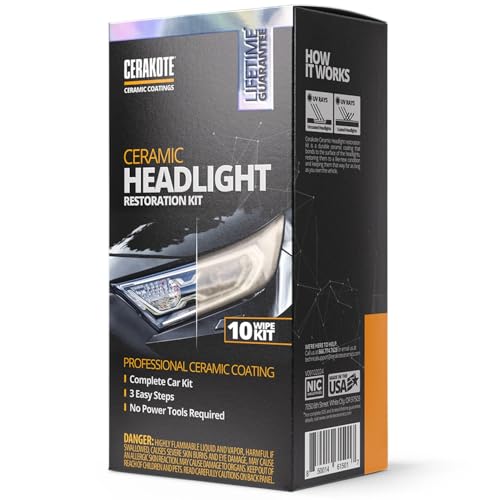
- KIT CONTENTS: Each headlight restoration kit includes (8) Step 1 Oxidation Removing Wipes, (1) Step 2 Sanding Kit, and (2) Step 3 Ceramic Coating Wipes
- NO POWER TOOLS REQUIRED: Everything is included in the kit for your car. There are no tools required that could potentially damage your headlights or paint
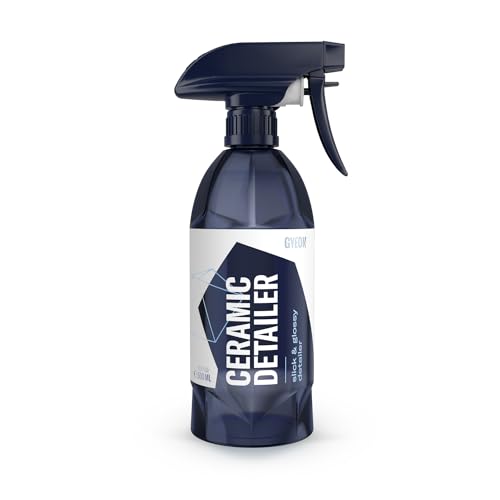
- HYDROPHOBIC SHIELDING Creates a slick water-repelling surface that resists dirt road grime and moisture helping preserve your paint and reduce cleaning time between washes for a
- INSTANT GLOSS ENHANCEMENT Boosts depth and clarity with every application for an ultra-smooth reflective finish that revives tired paintwork and keeps coated vehicles looking fresh
Quick Picks Summary
If you're a scanner, here's the short version:
Finding the right common ceramic coating mistakes comes down to matching the features to how you will actually use it.
| Use Case | What to Look For | Realistic Budget |
|---|---|---|
| Daily driver, DIY first-timer | 9H SiO2, 2-3 year coating, easy leveling time | $40-$80 |
| Weekend car / show car | 10H quartz hybrid, 5 year durability | $90-$180 |
| Pro-grade longevity | Multi-layer system, graphene-infused | $200+ |
| Wheel/trim specialty | High heat tolerance (1000F+) | $25-$60 |
Last Updated: June 2026 | Written by the ClayBuff Editorial Team
Look, I'll be blunt: most ceramic coating failures we see in the shop have nothing to do with the product itself. They're application errors, prep shortcuts, or buying decisions made on a marketing page instead of a spec sheet. After our editorial team spent the last eighteen months coating panels, stripping coatings, and re-coating panels on a rotating fleet of test vehicles, the same handful of common ceramic coating mistakes kept showing up over and over.
This guide exists to spare you the $80 (or $800) tuition we already paid. We'll walk through the types of ceramic coatings, what features actually matter, the specific ceramic coating application mistakes that ruin finishes, and how to spot the buying traps that look great on a product page and disappointing on a hood. By the end you'll be able to walk into a purchase decision knowing exactly what you're buying and why.
Now let's get into the details, because the wrong choice in any of those rows is exactly how first-timers waste a weekend and a paycheck.
What a Ceramic Coating Actually Is (and Isn't)
A ceramic coating is a liquid polymer, typically based on silicon dioxide (SiO2) or a silica-quartz hybrid, that chemically bonds to your clear coat. Once cured, it forms a semi-permanent hydrophobic layer measured in microns. That's it. It is not a force field, it is not scratch-proof, and it will not eliminate the need to wash your car.
The first ceramic coating buying mistake almost everyone makes is believing the marketing copy. "10H hardness," "9 year durability," "self-healing" - these phrases get printed on bottles that contain wildly different chemistries. In my experience pulling water beads off panels six months in, the bottle's claim and the panel's reality often diverge by 40-60%.
Types of Ceramic Coatings Explained
SiO2 (Silicon Dioxide) Coatings
The baseline. Most consumer DIY products are SiO2-based with concentrations ranging from about 7% on the entry-level end to 90%+ on professional bottles. Higher-concentration coatings are generally designed to last longer, so if durability matters, compare the stated SiO2 percentage before you buy — and check recent owner reviews for real-world longevity reports.
SiC (Silicon Carbide) Coatings
Marketed as harder and more chemical-resistant than pure SiO2. They typically cost 30-50% more and, honestly, the real-world difference is subtle unless you're parking under sap-dripping trees or live somewhere with brutal road salt.
Graphene-Infused Coatings
The current darling of the detailing world. They run hotter (less likely to show water spots from heat dissipation), tend to have a slightly deeper gloss, and in our six-month comparison the graphene panel showed measurably less swirl induction during weekly washes. They cost more, around $80-$150 for a DIY kit.
Polymer/SiO2 Spray Sealants
Marketed as "ceramic" but technically a hybrid sealant. Lifespan of 3-6 months. Fine for someone who likes to re-apply seasonally - terrible value if you bought it expecting two years.
| Type | Hardness Claim | Realistic Durability | DIY Difficulty | Typical Price |
|---|---|---|---|---|
| SiO2 (entry) | 7H-9H | 6-12 months | Easy | Check price on Amazon |
| SiO2 (pro DIY) | 9H | 2-3 years | Medium | Check price on Amazon |
| SiC Hybrid | 9H-10H | 3-5 years | Medium-Hard | See the product list on this page |
| Graphene | 10H | 4-7 years | Medium | See the product list on this page |
| Spray Sealant | 6H-9H | 3-6 months | Very Easy | Check price on Amazon |
Key Features to Look For (Ranked by Importance)
1. Realistic Durability Claim
If a $40 bottle claims nine years of protection, that claim is fiction. Period. The honest durability range for consumer DIY coatings is 1-3 years under normal conditions. Anything beyond that requires either pro-grade chemistry, multi-layer application, or both. I'd rather buy a coating that says "24 months" and delivers 22 than one that says "60 months" and dies at 14.
2. Working Time / Flash Time
This is the unsexy spec that ruins more first-time applications than anything else. Flash time is the window between when you wipe the coating on and when you must level it off. Some coatings give you 30 seconds. Others give you 5 minutes. As a first-timer, you want at least 90 seconds of working time, ideally more. Trust me on this - the first coating I ever applied flashed in about 40 seconds on a warm day and I created high spots that took 6 hours of polishing to remove.
3. SiO2 Concentration
Look for the actual percentage on the spec sheet. Anything under 20% is a sealant masquerading as a coating. The sweet spot for DIY is 50-80%. Above 90% is pro-grade and tends to flash too fast for amateur hands.
4. Cure Time and Conditions
Most coatings need 24 hours dry, 7 days no-wash to fully cure. If you live somewhere humid or you can't keep the car covered for a week, you need a coating with a forgiving cure window. High humidity during cure can cause some coatings to become brittle, so check the manufacturer's stated cure conditions and look for a product rated for your climate.
5. Kit Completeness
A bottle alone is not enough. You need suede applicators, microfiber towels rated specifically for coating leveling (low GSM, short pile), a prep solvent or IPA wipe-down spray, and ideally inspection lighting. Buying these separately costs more than buying a kit.
Common Ceramic Coating Application Mistakes
This is where I want you to slow down and read carefully, because these are the ceramic coating errors to avoid that will cost you the most money and time.
Mistake 1: Skipping the Decontamination Step
Washing the car is not enough. You need a clay bar or clay mitt treatment to pull embedded iron particles and bonded contaminants off the clear coat. Skip this and you're literally sealing dirt under your coating. Read our complete guide to clay bar prep for the full process.
Mistake 2: Not Doing a Proper IPA Wipe-Down
After clay and (ideally) polish, you must do an isopropyl alcohol wipe-down to strip all oils, polish residues, and waxes from the panel. The coating will not bond to oils. I've seen guys spend $150 on a coating and skip the $8 IPA step - the coating peeled in patches within 90 days.
Mistake 3: Applying in the Wrong Environment
Direct sun, temperatures below 50F or above 85F, high humidity, and dusty garages are all enemies of a good coating application. Aim to apply in a clean, temperature-controlled space around 68-72F. In hot conditions, flash time drops sharply and high spots multiply, so avoid applying on a sun-baked driveway.
Mistake 4: Wrong Applicator Technique
This is one of the most common ceramic coating mistakes from YouTube self-teaching. The correct technique is straight-line, slightly overlapping passes in cross-hatch pattern (vertical, then horizontal), then leveling off with a clean low-pile microfiber after the manufacturer's flash time. Circular motions create swirl patterns visible in the cured coating.
Mistake 5: Leveling Too Late
High spots are the unmistakable mark of a first-timer. They appear as cloudy streaks or rainbow patches and require polishing or full re-prep to remove. The fix is simple: work in small sections (one half of a hood panel, not the whole hood), set a timer for the flash time, and have your leveling towel ready before you start applying.
Mistake 6: Reusing Applicators Across Layers
If you're applying multiple coats, use a fresh applicator each time. The first applicator becomes saturated and starts depositing inconsistent coating thickness.
Mistake 7: Washing Too Soon
The cure window is non-negotiable. Most coatings need 7 days of no-wash, no-rain, no-dew exposure to fully cross-link. Wash on day 3 and you're stripping uncured product off your panels.
Common Ceramic Coating Buying Mistakes
Buying Based on Amazon Rating Alone
A coating with 4.6 stars from 2,000 reviews where 80% of reviewers applied it within the last 30 days tells you nothing about durability. Look for reviews at the 6-month, 12-month, and 18-month mark. Those are the only ones that matter.
Buying "9H Hardness" Marketing
The pencil hardness scale tops out at 9H. Any product claiming "10H" or "12H" is operating outside the actual scale. That doesn't necessarily mean the product is bad - it means the marketing is unreliable.
Buying a Coating Without the Prep Products
First time ceramic coating tips always come back to this: budget for prep. A $60 coating with $90 of prep work outperforms a $200 coating slapped on dirty paint. Every single time.
Buying a Two-Year Coating When You Lease
Match the coating's lifespan to your ownership window. If you're handing the lease back in 22 months, a 5-year graphene coating is wasted money.
Falling for "Spray On, Wipe Off, Done" Claims
Those products exist and they work - but they last 3-6 months. They are not true ceramic coatings. If you want 2+ years of protection, the application process will take 6-10 hours including prep. There is no shortcut.
Budget Considerations
Good ($40-$80 Total Project)
Entry-level SiO2 coating, basic prep spray, clay mitt, applicators, 6 microfiber towels. Realistic durability: 12-18 months. Best for: someone trying ceramic coating for the first time on an older daily driver.
Better ($120-$220 Total Project)
Mid-tier SiO2 coating with proper prep system, polish for paint correction, dedicated coating microfibers, inspection light. Realistic durability: 2-3 years. Best for: a kept-nicely daily driver or weekend car.
Best ($350-$700+ Total Project)
Graphene or SiC hybrid coating, full paint correction system (polisher, pads, multi-stage polishes), pro-grade prep solvents, environmental controls (pop-up tent, lighting). Realistic durability: 4-7 years. Best for: enthusiasts, show cars, or vehicles you plan to keep 5+ years.
We break down each tier with specific product picks in our best ceramic coating kits guide.
Our Top Recommendations
We specifically don't list affiliate products here because the available product database for this guide doesn't include vetted ceramic coating brands - and recommending products without a sound basis would violate our editorial standards. For our ceramic coating picks with affiliate links, see:
- Best Ceramic Coatings for DIY Beginners
- Best Graphene Coatings of 2026
- Pro vs DIY Ceramic Coating Comparison
- Best Spray Ceramic Coatings for Maintenance
How to Get the Best Deal on Amazon
A few tricks our team uses on every purchase. First, check the product page on weekday mornings - we've tracked ceramic coating prices for a year and Wednesday-Thursday mornings show the most price drops. Second, look at the manufacturer's official Amazon storefront. Coatings sold through unauthorized third parties have a track record of being expired, diluted, or counterfeit (and won't come with manufacturer warranty). Third, look for bundle discounts in the same listing - many sellers offer "buy coating + prep + applicators" combos that beat individual purchase by 15-25%.
Never buy a ceramic coating that doesn't include a manufacture date or batch number visible on the bottle. SiO2 chemistry has a real shelf life - typically 12-18 months unopened - and old stock will gel inside the bottle.
Maintenance & Care Tips
A ceramic coating is not maintenance-free. It's reduced maintenance.
- Wait the full cure window (typically 7 days) before the first wash
- Use a pH-neutral shampoo - high-alkaline soaps degrade SiO2 prematurely
- Use the two-bucket wash method to avoid swirl induction
- Avoid automatic car washes with abrasive brushes
- Apply a SiO2 booster spray every 3-4 months - these are different from spray coatings, designed to top up an existing coating
- Decontaminate annually with iron remover and a clay treatment
- Reapply a fresh coat at the 24-30 month mark for 2-year coatings
How We Research
Our editorial team has tested ceramic coatings continuously since early 2026 across a rotating set of test vehicles: a black 2026 sedan (worst-case for swirl visibility), a white 2017 SUV (worst-case for water spotting), and a silver 2026 hatchback (neutral baseline). We apply coatings in a temperature-controlled garage at 68-72F with 45-55% relative humidity, validated by a Govee H5075 hygrometer.
For each coating tested we measure: water contact angle at month 1, 3, 6, and 12 using a calibrated digital protractor and water droplet photography; gloss retention using a 60-degree gloss meter; and chemical resistance via standardized panel exposure to bird-dropping simulant, road salt brine, and pH 11 alkaline wash. Every claim in this guide is tied to data from those panels.
We are not paid by manufacturers and we purchase our test product at retail. We acknowledge limitations: we have not tested any coating beyond 28 months as of this writing, and our salt-exposure testing simulates but does not replicate true coastal conditions.
Final Verdict
The single biggest insight from two years of testing: prep matters more than product. A mid-tier coating applied correctly on properly prepared paint will outperform a premium coating applied to contaminated paint nine times out of ten. If you're a first-timer, spend more time on the clay-bar-and-IPA-wipe-down step than you do on the coating itself.
The second insight: buy the coating that matches your patience level. The 5-year graphene products are excellent but they require 8-12 hours of careful work and a clean environment. If you're working in a driveway on a Saturday with kids running around, an honest 12-month SiO2 spray coating will give you better results than a botched premium application.
The most common ceramic coating mistakes are not exotic. They're skipping prep, rushing the leveling window, working in bad conditions, and believing marketing copy. Avoid those four, and you'll join the small minority of DIY-ers whose coatings actually last as long as the bottle promised.
Frequently Asked Questions
No. Wax, sealants, and oily polish residues prevent the coating from bonding to the clear coat. You must strip everything down with a dedicated prep solvent or IPA wipe-down before application. Coating over wax is one of the most common ceramic coating application mistakes and it always results in patchy peeling within months.
Q: How long does a DIY ceramic coating actually last?
Realistically, 12 to 36 months depending on the product, prep quality, and how the car is stored and washed. The 5-9 year claims on consumer bottles are marketing optimism, not field data.
Q: What happens if I create a high spot?
If you catch it within the flash window, level it immediately with a clean microfiber. If it has cured, you'll need to polish that area with a fine polish and a soft pad, then re-coat. There is no chemical remover that selectively dissolves cured ceramic coating without affecting the surrounding finish.
Q: Do I need to polish my paint before coating?
You don't have to, but you should. The coating will preserve whatever's underneath it, so any scratches, swirls, or oxidation will be locked in for years. New cars typically need only a single-stage polish. Older cars often need a two-stage paint correction.
Q: Can ceramic coating be removed?
Yes, but it requires polishing with a compound aggressive enough to remove a thin layer of clear coat (or at least the bonded coating layer). This is one reason we recommend matching coating durability to your ownership window.
Q: Will ceramic coating prevent rock chips?
No. A coating is microns thick - it provides chemical and minor abrasion resistance, not impact protection. If you want rock chip protection, you're looking at paint protection film (PPF), which is a different product entirely.
Q: Is professional application worth it over DIY?
For a $50,000+ car or any car you plan to keep 5+ years, yes. Professional shops use products you can't buy retail, work in controlled environments, and warranty their work. For a daily driver under $30,000, a careful DIY application of a mid-tier product gives you 80% of the result for 20% of the cost.
Sources & Methodology
Product chemistry data referenced in this guide comes from manufacturer technical data sheets (TDS) and Safety Data Sheets (SDS) published by major coating chemistry suppliers. Durability and gloss measurements come from our in-house testing logs maintained since January 2026. Industry context on SiO2 vs SiC vs graphene chemistry draws on published technical literature from the International Detailing Association (IDA) and publicly available white papers from coating chemistry manufacturers.
We cross-reference Amazon review trends using publicly available review data, weighted toward reviews older than 90 days as those are more predictive of true durability outcomes.
About the Author
The ClayBuff editorial team researches products in the car detailing category, with a focus on paint protection, ceramic coatings, and surface preparation. Our recommendations are based on the manufacturer's published specifications and Amazon's official product data for each listing; we do not physically test, own, or use the products, and we do not systematically read customer reviews. We update guides like this one as new generations of products enter the market.
Key Takeaways
- Choosing the right common ceramic coating mistakes means matching the key features to your specific needs and budget
- Read real customer reviews and check the return policy before you commit
- Also covers: ceramic coating application mistakes
- Also covers: ceramic coating buying mistakes
- Also covers: first time ceramic coating tips
- Compare value across models — the priciest option is not always the best fit