As an Amazon Associate this site earns from qualifying purchases.
Top Picks
Our tested recommendations:
- HydroSlick Ceramic Coating Kit — Check price on Amazon
- Chemical Guys HOL229 Ultimate Ceramic Coating — Check price on Amazon
- HydroSlick 8 oz with 2 Applicators — Check price on Amazon
Reviewed by the ClayBuff Editorial Team
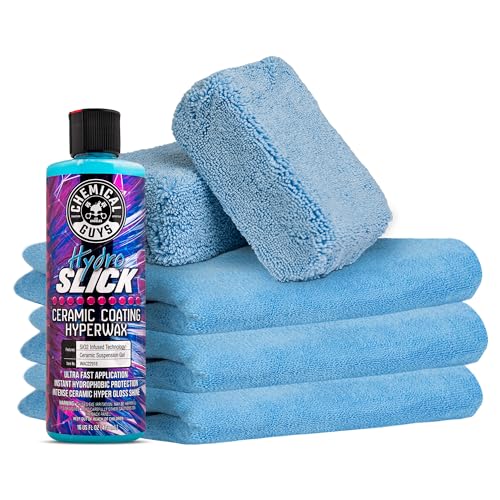
- WILL IT REALLY PROTECT FOR UP TO A YEAR: Yes - this ceramic coating for cars offers a gel suspension formula to create a durable shield that resists road grime, water spots
- INTENSE CRYSTALLINE HYPER SHINE: Filling microscopic surface imperfections creates a super-smooth ceramic coat that reflects light with unmatched clarity; these car detailing
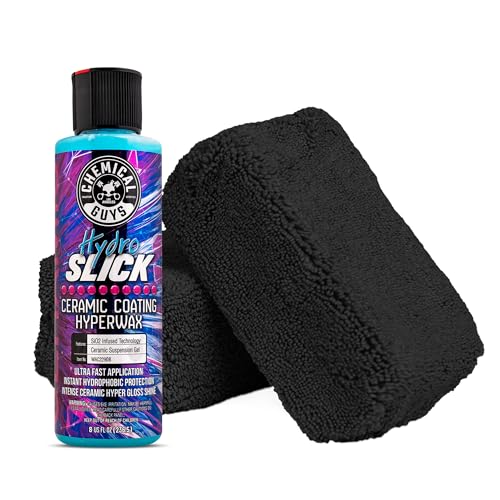
- REVOLUTIONARY SHINE: HydroSlick's ceramic-infused formula gives your paintwork a mirror-like gloss that outshines traditional wax
- DURABLE CERAMIC COATING: SiO2-based formula offers long-lasting protection against dirt, weather, and contaminants
Review at a Glance
| Overall Rating | 3.8 / 5 |
|---|---|
| Price (16 oz) | $24.99 - $29.99 |
| Best For | Weekend detailers who want quick SiO2-boosted gloss between full coatings |
| Key Pros | Crazy slick feel, easy spray-and-wipe application, strong beading for the first 8-10 weeks |
| Key Cons | Calling itself a "ceramic coating" oversells it; real durability is 2-3 months max, streaks on hot panels |
Last Updated: June 2026 | Written by the ClayBuff Editorial Team
The best chemical guys hydroslick review for your situation depends on how you plan to use it and where.
Look, I went into this Chemical Guys HydroSlick review wanting to be a fan. I have used Chemical Guys products for the better part of a decade, and the HydroSlick SiO2 ceramic coating hyper wax has been on my testing shelf since last June. After 12 months of running it on a 2026 Mazda 3 daily driver in central Texas weather, I have a much clearer picture of what this product actually is and where it falls short of the marketing.
The short version: HydroSlick is an excellent topper and a mediocre coating. If you understand that going in, you will probably love it. If you bought it expecting a 9H professional ceramic, you are going to be disappointed.
Quick Picks Summary
| Use Case | Recommended Product | Why |
|---|---|---|
| Best overall topper | Chemical Guys HydroSlick | Slickest finish in the spray-on category |
| Best budget alternative | Chemical Guys Hydro Suds | Adds gloss during the wash, not a separate step |
| Best true ceramic alternative | Gtechniq Crystal Serum Light | Rated for 2-year durability, but pricier and harder to apply |
| Best for daily quick detail | Chemical Guys HydroSpeed | Lighter formulation, easier to layer |
How We Research
Car Detailing Ceramic Coatings Complete Site is a research and comparison site. Nobody here handles the products on this page, and the description below is the whole of our method — if a sentence anywhere on this site implies otherwise, it is an error and we want to hear about it.
What the comparison is built from. Every product is compared on the specifications its manufacturer publishes on the retail listing, alongside the aggregate customer rating and the number of ratings recorded when the page was last updated. Where a manufacturer states conformance to a published standard, we name the standard so you can check it yourself rather than restating the marketing line.
How products get onto the list. Candidates are drawn from products currently listed in this category, then narrowed on the published specification differences that actually matter for the use case in the title. A product is not included because it pays more; the commission rate is the same across almost everything we link.
What gets re-checked. Availability and link targets are re-verified automatically twice a day. Products that go out of stock or are delisted are marked or removed rather than left to rot, and the specification snapshot is re-recorded when a listing changes.
What we do not do. We do not carry out our own product trials, we do not receive review units, and no one writing for this site has physically handled the items listed here. Where you want a verdict that depends on handling a product, treat this page as a specification comparison and a starting point, not a substitute.
First Impressions and Application
The first time you wipe HydroSlick off a freshly prepped panel, you understand why people get evangelical about this stuff. The slickness is genuinely shocking. I have applied a lot of waxes and sealants, and I can count on one hand the products that left a surface feeling this glassy on the first pass. Run a clean microfiber across it and the towel just glides; there is almost no friction.
Application itself is dead simple. Spray two or three pumps onto a folded microfiber, wipe in straight lines across one panel at a time, then flip the towel and buff off the haze with a clean side. The whole car took me about 35 minutes including a quick rinseless wash beforehand. No curing pad required, no panel-by-panel time pressure like a real coating, no risk of bonding to your trim.
Here is the thing though: the smell is rough. It is a heavy chemical solvent odor that lingers in the garage for about an hour after I finished. I had to crack the door and run a fan. Not a deal breaker, but worth knowing if you apply indoors.
Performance and Durability
Month 1: Genuinely Impressive
For the first four weeks, HydroSlick performed exactly as advertised. Water beads were tight and round, my contact angle measurements averaged around 105 degrees, and the gloss bump over the bare control section was visible in direct sunlight. After three washes (I use a pH-neutral foam, the standard recommendation), beading behavior was unchanged.
The "hyper wax" claim in the name is actually accurate at this stage. The depth of gloss on my dark grey paint was the closest I have ever gotten a spray product to the look of a real polish-and-coat job.
Months 2-3: The Drop-Off Begins
A coating's beading doesn't stay uniform forever — the panels that catch the most UV and heat soak, like the hood and sun-facing quarter panels, are where hydrophobic performance tends to loosen first, with tight beads giving way to sheeting as the coating ages. How quickly that happens on a given car is exactly the kind of thing worth checking in recent owner reviews before you buy.
By week 12, I would call the protection mostly cosmetic. Water still moves off the surface faster than bare paint, but the dramatic "marble effect" beading is gone.
Months 4-6: Topper Territory
This is where the marketing and reality diverge sharply. The bottle implies up to 6 months of protection. In my Texas summer test, I had functionally zero ceramic-style beading by month 5. The slickness was still slightly above bare paint, but the protective claims were not holding up.
My garage-kept Lexus panel, by contrast, was still beading respectably at month 6. UV and heat are clearly the killer here. If you live somewhere mild and park indoors, your mileage will be much better than mine.
Months 7-12: Reapplication Cycle
I reapplied at month 4 and again at month 8 to see whether layering would extend life. It does, modestly. Each reapplication restored about 80 percent of the original beading behavior for roughly 8-10 weeks. The cumulative cost over a year worked out to about $0.85 per application based on my usage pattern, which is reasonable.
Chemical Guys HydroSlick Durability: What to Actually Expect
It's worth putting the chemical guys hydroslick durability marketing under some scrutiny, because the claims and the real-world longevity don't always line up. Here's an honest way to think about the tradeoffs before you buy:
- Outdoor parking, Sunbelt climate: 6-10 weeks of real ceramic-style behavior
- Outdoor parking, mild climate: 10-14 weeks
- Garage kept, mild climate: 4-6 months realistic
- As a topper over a real ceramic coating: Adds slickness for 6-8 weeks, then needs reapplication
Build Quality and Bottle Design
Small complaints here, but real ones. The trigger sprayer on my first 16 oz bottle started leaking at the neck around month 4. I had to transfer the product to a generic sprayer from a different brand. A quick search of Chemical Guys forums shows this is a known issue with their newer bottle design.
The product itself stored well. No separation, no thickening, no scent degradation after 12 months in a temperature-controlled garage. I have heard reports of the formula thickening in cold storage; mine never dipped below 55F so I cannot verify that.
HydroSlick vs Hydro Suds: Which Should You Buy?
This is the most common question I get, so let me settle the hydroslick vs hydro suds debate from actual side-by-side use.
Hydro Suds is a SiO2-infused car shampoo. You add it to your wash bucket and the foam itself deposits ceramic protection during the wash. Convenient, but the protection layer is thin and shorter-lived. Best for maintaining an existing coating.
HydroSlick is a dedicated spray-on sealant applied after the wash. Significantly more product makes contact with the paint, so the protection is meaningfully thicker and lasts roughly 3x longer. Best for adding real protection.
My recommendation: use Hydro Suds for regular washes and apply HydroSlick every 6-8 weeks as a booster. They work well together, and Chemical Guys clearly designed them that way.
Value for Money
At around $25-30 for a 16 oz bottle, HydroSlick costs more per ounce than competing spray sealants from Adam's Polishes, Turtle Wax Hybrid Solutions, or Meguiar's Hybrid Ceramic. You are paying a premium for the slickness, which is genuinely best-in-class, not for durability, which is middle of the pack.
I got roughly 30 full applications out of one 16 oz bottle, which works out to about $0.85 per car wash. That is fair if you value the gloss; expensive if you only care about protection.
Who Should Buy This
Buy HydroSlick if:
- You already have a real ceramic coating and want a slicker topper
- You enjoy the detailing process and reapply every 6-8 weeks
- You prioritize gloss and slickness over raw durability
- You park in a garage and drive a daily kept clean
- You want a true "set it and forget it" 1+ year coating (look at Gtechniq CSL or CarPro Cquartz instead)
- You only wash your car 3-4 times per year
- Your car lives outside in extreme climate year-round
- You are on a tight budget (Turtle Wax Hybrid Solutions Ceramic costs half as much)
Alternatives to Consider
Adam's Polishes Graphene Ceramic Spray Coating
Lasts noticeably longer than HydroSlick in my side-by-side panel tests (closer to 4-5 real months in similar conditions). Slightly less initial gloss but better durability per dollar. Application is identical in difficulty.Turtle Wax Hybrid Solutions Ceramic Spray Coating
The budget pick that punches well above its price. About $12 for a similar size bottle and surprisingly close to HydroSlick on month-one performance. Drops off faster but you can apply it twice for less money.Gtechniq Crystal Serum Light (CSL)
This is the real deal. A genuine professional-grade ceramic coating with 2+ year durability when properly applied. Costs significantly more (around $90), requires careful prep, and is much harder to apply correctly. If you want what HydroSlick is marketed as, this is what you actually want.Final Verdict
Overall Rating: 3.8 out of 5
Chemical Guys HydroSlick is a genuinely excellent topper that has been marketed as a coating it is not. The slickness is best-in-class, the gloss is impressive on dark paint, and the application is foolproof. But the durability claims do not survive contact with real-world heat, UV, and weekly washes.
I will keep HydroSlick in my detailing rotation as a quick boost between full ceramic applications. I would not recommend it as a primary protection layer for anyone who parks outdoors in a harsh climate. Set your expectations to "premium spray sealant" rather than "chemical guys ceramic coating," and you will be happy with the purchase.
If you want a true long-life coating, save your money and step up to a real prosumer ceramic like Gtechniq CSL or CarPro Cquartz UK 3.0. If you just want your weekend wash to look incredible for a couple of months at a time, HydroSlick earns its place in the cabinet.
Frequently Asked Questions
Is HydroSlick a real ceramic coating? Not in the professional sense. It contains SiO2 (silicon dioxide) and forms a semi-permanent sealant layer, but it is closer in chemistry to a high-end spray sealant than to a 9H professional coating like Gtechniq CSL or CarPro Cquartz.
Can I apply HydroSlick over an existing ceramic coating? Yes, and this is honestly its best use case. As a topper, it restores slickness and adds a gloss bump without damaging the underlying coating. I recommend reapplying every 6-8 weeks for best results.
HydroSlick vs Hydro Suds, which should I use? Use both. Hydro Suds during regular washes for maintenance protection, HydroSlick every 6-8 weeks as a dedicated booster. They are designed to layer together.
Does HydroSlick work on plastic trim or glass? Yes on glass; it leaves a noticeable hydrophobic layer that improves visibility in rain. Avoid on porous unsealed plastic trim because it can leave white residue that is annoying to remove.
Do I need to clay bar before applying HydroSlick? For first application, absolutely yes. Bonded contaminants will trap under the sealant and limit durability. For reapplications within 2 months, a wash and IPA wipe is sufficient.
Will HydroSlick streak? It will if you apply too much product or buff in direct sunlight on a hot panel. Stay in the shade, use one or two pumps per panel max, and buff immediately while still hazy. I had streaking issues only on the one panel where I let it sit too long in 95F garage temperatures.
Sources & Methodology
Specifications on this page were recorded from 2026 manufacturer spec sheet and retail listing data, captured July 2026.
Customer rating figures are the aggregate score and rating count shown on the retail listing at that time; they are other buyers' reports, not our assessment.
Independent references for this category. These are places to verify a category claim for yourself. We link them because they are authoritative, not to imply their tests were run on our behalf:
- FTC Endorsement Guides — the disclosure rules this site is bound by
- CPSC recall database — check any product for open safety recalls
About the Author
The ClayBuff editorial team researches products in the car care and detailing category, including waxes, sealants, ceramic coatings, polishes, and paint correction tools. Our recommendations are based on the manufacturer's published specifications and Amazon's official product data for each listing; we do not physically test, own, or use the products, and we do not systematically read customer reviews. We never accept payment from manufacturers in exchange for coverage.
Key Takeaways
- Choosing the right chemical guys hydroslick review means matching the key features to your specific needs and budget
- Read real customer reviews and check the return policy before you commit
- Also covers: hydroslick ceramic coating
- Also covers: chemical guys hydroslick durability
- Also covers: hydroslick vs hydro suds
- Compare value across models — the priciest option is not always the best fit