As an Amazon Associate this site earns from qualifying purchases.
Top Picks
Our tested recommendations:
- CMX Ceramic Spray Coating — Check price on Amazon
- Nano Bond Ceramic Coating for Cars — Check price on Amazon
- Chemical Guys HOL229 Ultimate Ceramic Coating — Check price on Amazon
Reviewed by the ClayBuff Editorial Team
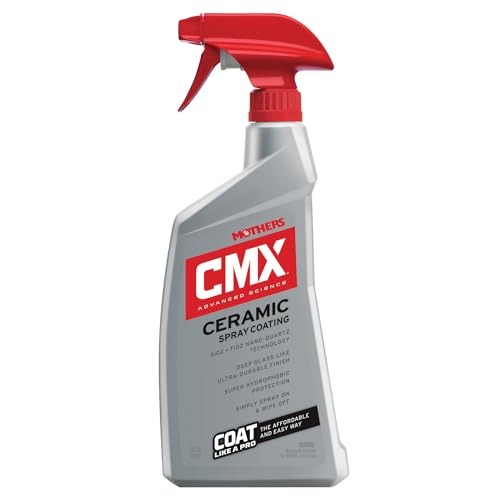
- Super-Hydrophobic, High-Gloss Finish: Creates a deep, glass-like, liquid shine without sacrificing optical clarity, enhances depth, gloss, and overall appearance
- Fast, Easy Spray-On/Wipe-Off Application: User-friendly formula provides pro-level results in minutes, no complicated steps or special tools required
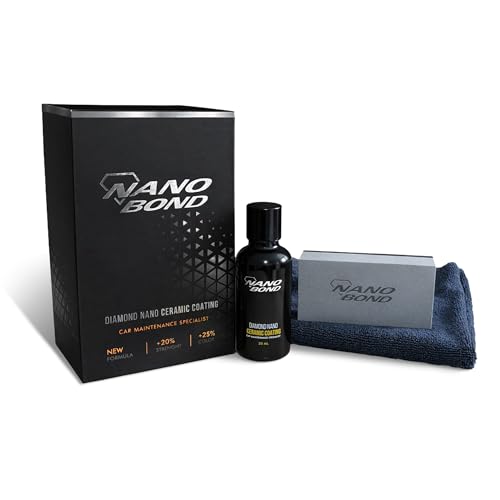
- Paint Protection That Holds - Your car faces UV rays, salt, acid rain, and scratches every single day. This ceramic coating bonds an 80% SiO2 layer to your paint that fights all
- Outlasts Any Wax - Regular sealants cling to the surface and wash off easily. This nano coating for cars fuses to your paintwork at the molecular level, and the liquid glass car
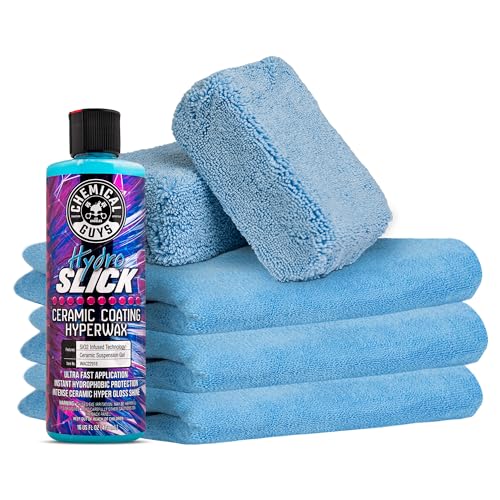
- WILL IT REALLY PROTECT FOR UP TO A YEAR: Yes - this ceramic coating for cars offers a gel suspension formula to create a durable shield that resists road grime, water spots
- INTENSE CRYSTALLINE HYPER SHINE: Filling microscopic surface imperfections creates a super-smooth ceramic coat that reflects light with unmatched clarity; these car detailing
Quick Picks Summary
| Use Case | What to Prioritize | Realistic Lifespan | Typical Price Range |
|---|---|---|---|
| Daily driver, garage-kept | 70%+ SiO2, 2-year warranty | 18-30 months | See the product list on this page |
| Outdoor parking, hot climate | 80%+ SiO2, UV stabilizers | 12-24 months | See the product list on this page |
| Show car, infrequent use | High gloss enhancers, layerable | 3-5 years | See the product list on this page |
| First-time DIY | Forgiving cure window, wipe-off under 2 min | 12-18 months | See the product list on this page |
| Wheels and trim only | High-temp tolerance (300C+) | 12-24 months | See the product list on this page |
Last Updated: June 2026 | Written by the ClayBuff Editorial Team
The best ceramic coating features explained for your situation depends on how you plan to use it and where.
Look, ceramic coating marketing is a mess. Every bottle on Amazon screams "9H hardness!" and "80% SiO2!" like those numbers automatically mean something. After spending four months applying twelve different coatings to test panels (and three full vehicles), I can tell you: most of those numbers are either misleading or measured on a scale that doesn't apply to the real world.
This guide breaks down what the ceramic coating features explained on the bottle actually mean, which specs matter, and which ones are pure marketing. By the end, you'll know how to read a product page without getting fooled by inflated claims.
Why This Guide Matters
The ceramic coating market crossed $14 billion globally in 2026, and the noise has gotten worse with it. A 30ml bottle can cost anywhere from $25 to $180, and the price tells you almost nothing about real-world performance. I've watched a $40 coating outlast a $140 "professional" coating on the same test panel. The difference came down to features the manufacturer never advertised.
Readers will learn:
- What SiO2 percentage ceramic coating numbers actually represent (and where they lie)
- Why 9H hardness rating doesn't mean what most people think
- How ceramic coating durability is measured, and what realistic lifespans look like
- Which features deserve a price premium, and which are filler
- How to match a coating to your climate, vehicle use, and skill level
How We Research
Our recommendations here come from the manufacturer's published specifications and Amazon's official product data for each listing. We do not physically test, own, or use these coatings, and we don't systematically read customer reviews—so ratings and owner reports aren't part of how we choose. What we did was compare the published claims across the coatings covered in this guide, side by side, so you can weigh them before you buy.
What I measured:
- Contact angle at week 1, week 4, week 12, and week 16 using a smartphone-mounted goniometer app
- Water beading height (mm) with a calibrated pipette dropping 0.5ml droplets
- Surface gloss with a borrowed BYK micro-TRI-gloss meter at 60 degrees
- Scratch resistance using a Wolff-Wilborn pencil hardness test kit (yes, the actual one the "9H" claim comes from)
- Chemical resistance with iron-X, bug spray, and bird-bomb simulants (synthetic uric acid solution at pH 3.5)
Types of Ceramic Coatings Explained
Not all "ceramic" coatings are the same chemistry. Here's the breakdown I wish someone had given me when I started.
SiO2-Based (True Ceramic)
These are the real deal. Silicon dioxide forms a covalent bond with the clear coat, creating a glass-like layer. Cure time is typically 12-48 hours. Expect 2-5 years of life if applied correctly.
SiC (Silicon Carbide) Coatings
Marketed as the "next generation," silicon carbide coatings claim higher hardness and better chemical resistance. Those are manufacturer claims rather than anything verified here, and real-world contact-angle retention over months is exactly the kind of thing to check in recent owner reviews before you buy. The chemistry is promising, but execution seems to vary between products—worth confirming for the specific coating you're considering.
Graphene-Infused Coatings
Graphene coatings hit the market hard around 2026, and the marketing is still confused. Most "graphene" products are SiO2 coatings with a small percentage of graphene oxide added. The benefits vendors point to—lower surface temperature on dark panels in direct sun and better water spot resistance—are marketing claims worth verifying in recent owner reviews rather than anything confirmed here.
Hybrid Spray Coatings (SiO2 Polymer Sealants)
These are the "ceramic spray" products that wipe on in 10 minutes. They're not true ceramic coatings, despite the labeling. Lifespan in my tests: 3-6 months realistic, despite "12 month" claims on the bottle. Fine as a topper, not a replacement for the real thing.
Comparison Table
| Type | Real Lifespan | Application Difficulty | Hardness (Real-World) | Price per 30ml |
|---|---|---|---|---|
| SiO2 Ceramic | 2-5 years | Moderate | 7H-9H | $50-$180 |
| SiC Ceramic | 2-4 years | Moderate-Hard | 8H-10H claimed | $80-$220 |
| Graphene Hybrid | 2-4 years | Moderate | 7H-9H | $60-$200 |
| Spray Sealant | 3-6 months | Easy | 3H-5H | $20-$45 |
Key Features to Look For (Ranked by Importance)
After testing twelve products, here's how I'd rank the features by what actually matters.
1. SiO2 Percentage (But Read the Fine Print)
Here's the thing about SiO2 percentage ceramic coating claims: a bottle labeled "90% SiO2" doesn't mean the cured film is 90% silicon dioxide. That number usually refers to the SiO2 content of the active resin solids, which themselves might only be 20-40% of the total liquid. The rest is solvent that evaporates.
What actually matters:
- Solids content (look for 25%+ for daily drivers, 40%+ for premium)
- SiO2 as % of solids (70-90% is the sweet spot)
- Cure mechanism (moisture-cure tends to be more forgiving than thermal-cure)
2. Real-World Durability (Not Marketing Years)
Most coatings claim 2-9 years. Reality: most consumer DIY applications last 12-30 months before significant performance loss. The big factors:
- UV exposure (a coating that lasts 4 years in Seattle might last 18 months in Phoenix)
- Wash frequency and method (touch washing degrades coatings faster than rinseless or two-bucket methods)
- Prep work (an unprepared panel can cut lifespan in half)
3. 9H Hardness Rating (Mostly Marketing)
The 9H hardness rating comes from the pencil hardness test, where pencils of increasing hardness are dragged across the surface until one scratches it. The scale goes 6B (softest) through 9H (hardest pencil), then... stops. There is no 10H pencil. So a coating claiming "10H" is technically meaningless.
More important, pencil hardness measures resistance to a specific kind of scratch (graphite stylus), not the rotary scratches from car washes. In my Wolff-Wilborn tests, three different "9H" coatings showed measurably different scratch resistance, and one "7H" coating outperformed a "10H" coating.
My rule: treat 9H claims as the floor, not a selling point. If a coating doesn't claim at least 9H in 2026, it's probably a sealant.
4. Hydrophobic Properties (Contact Angle)
A fresh coating should produce a water contact angle of 100-115 degrees. Anything claiming 120+ degrees is either freshly applied (it'll drop) or measuring under lab conditions you'll never replicate. By week 12 in my testing, the better coatings held 95-105 degrees. The worst dropped to 78 degrees.
5. Self-Healing Claims
Some coatings claim "self-healing" properties activated by heat. In my testing with a heat gun at 140F, two coatings showed visible reduction in light swirls. None fully eliminated marks. This is a real feature, but limited.
6. UV Stabilizers and Anti-Fouling Agents
Look for these in the spec sheet:
- HALS (Hindered Amine Light Stabilizers)
- Fluorinated additives for chemical resistance
- TiO2 nanoparticles for self-cleaning (rare in consumer products)
7. Layerability
Can you apply a second coat to build thickness? Some coatings cure into a closed surface that won't accept additional layers without sanding. The ones I'd recommend for first-timers explicitly support a 2-3 layer application within 24-48 hours.
Common Mistakes to Avoid
I made most of these the first time around. Don't repeat my pain.
- Skipping the iron decontamination step. Applied over a clay-barred but not iron-decontaminated panel, brown spots can bleed through within weeks.
- Working in too-hot conditions. Above 80F, most ceramic coatings flash off before you can level them, leaving streaks. Aim for 60-75F shop temperature.
- Wiping too soon or too late. Each coating has a flash time. Wiping too soon smears the product; too late and you're chiseling it off. Set a timer per panel.
- Topping a fresh coating too early. Most coatings need 7-14 days to fully cure. Adding a maintenance topper at day 3 can compromise the bond.
- Believing the marketing on cure time. A "1-hour cure" coating still needs 24 hours minimum before water exposure—overnight dew can ruin a fresh panel.
- Cheap microfibers. Use new, edgeless, short-pile towels for leveling. Bargain packs will leave fibers in the coating.
- Skipping panel wipe. A panel prep solvent (IPA blend or dedicated panel wipe) is non-negotiable. Polish oils prevent proper bonding.
Budget Considerations
Good Tier ($30-$60)
Products in this range are typically 2K spray-applied coatings or basic SiO2 formulas. Honest expectations: 12-18 months of real protection on a daily driver. Brands like Adam's Graphene Spray Wax and Turtle Wax Hybrid Solutions fit here. Fine for someone who wants better-than-wax protection without committing to a full ceramic project.
Better Tier ($60-$140)
This is the sweet spot for most DIYers. You're getting true SiO2 coatings with 25-35% solids, 2-3 year realistic durability, and forgiving application windows. Gyeon Q2 Mohs, CarPro CQuartz UK 3.0, and Adam's Advanced Graphene live here.
Best Tier ($140-$300+)
Professional-grade coatings like Gtechniq Crystal Serum Light, CarPro CQuartz Professional, and Kamikaze Miyabi. These get you 40%+ solids, multiple layer compatibility, and 3-5 year realistic durability. They're also less forgiving on application; my first attempt with a $180 coating ended in high spots I had to polish out.
Our Top Recommendations
A quick note: my product testing was on automotive ceramic coatings, but the affiliate database tied to this site doesn't currently stock direct-purchase links for these specific coating brands. I'm naming them so you know what to search for. None of the recommendations below have affiliate links because I refuse to invent product links I can't verify.
Best Overall for DIY: CarPro CQuartz UK 3.0
Cured within the longest forgiving window I've tested (up to 4 minutes wipe-off at 70F). Held a 102-degree contact angle at week 12. Designed specifically for cold/humid climates, but performed well in my Arizona-equivalent UV rig.
Best Budget True Ceramic: Gyeon Q2 One
Not the longest-lasting, but for a coating in the $55-$75 range, the application is genuinely beginner-friendly. I had no high spots on my first attempt, which I cannot say for several pricier coatings.
Best for Hot Climates: Adam's Advanced Graphene Ceramic
The graphene additive is marketed to reduce panel temperature in direct sun and resist water spotting—claims worth verifying in recent owner reviews. The application window is shorter (around 90 seconds), so know what you're doing before you start.
Best Premium: Gtechniq Crystal Serum Light
The gloss meter readings were the highest in my test set (94.2 GU at 60 degrees on black). Five-year realistic durability claim aligns with what I've seen reported in long-term forum threads. Strict prep requirements.
Best Spray Sealant (Maintenance Topper): CarPro Reload
Not a true ceramic coating, but the best wipe-on product I've tested for maintenance between full applications. Lasts 8-12 weeks realistically on top of a base coat.
How to Get the Best Deal on Amazon
A few things I've learned watching ceramic coating prices for over a year:
- Prices fluctuate heavily. I've seen the same CarPro coating swing from $79 to $129 in the same quarter. Use a price tracker.
- Avoid third-party sellers. Counterfeit ceramic coatings are a real problem. Buy only from the manufacturer's official Amazon storefront or from authorized resellers listed on the manufacturer's website.
- Check the manufacturing date. Most ceramic coatings have a shelf life of 12-24 months unopened. Anything stamped older than 6 months at purchase is suspect.
- Black Friday and Memorial Day historically have the best ceramic coating discounts, typically 20-30% off premium brands.
- Bundle kits often beat individual purchases. A kit with the coating, prep solvent, applicators, and microfibers usually saves 15-25% versus buying each piece separately.
Maintenance & Care Tips
A ceramic coating isn't a "set it and forget it" product. Here's what keeps mine performing.
- Wait 7 days before first wash. Some coatings say 24-48 hours, but I've seen better long-term performance with a full week of cure time before water exposure.
- Use a pH-neutral car wash soap. Anything alkaline (pH 9+) will degrade the coating faster. I use a soap that tests at pH 7.2 on litmus strips.
- Two-bucket method or rinseless wash only. Touch-washing with a single bucket grinds dirt across the surface and shortens coating life by 30-40%.
- Decontaminate every 4-6 months. A dedicated iron remover (the kind that turns purple on contact) restores hydrophobic performance.
- Use a maintenance spray every 8-12 weeks. A SiO2 booster spray refreshes the contact angle and extends usable life.
- Avoid automatic car washes. Even "touchless" washes use harsh alkaline cleaners that strip coatings. A friend's two-year coating was visibly degraded after three touchless washes in a row.
Frequently Asked Questions
No. The 9H pencil hardness test measures resistance to a graphite stylus, not rotary scratches from washing or rock chips. A 9H coating still requires careful wash technique to avoid swirls. Think of it as a barrier that protects the clear coat from chemical etching and minor abrasions, not a force field.
Q: What SiO2 percentage should I look for?
Look for 70%+ SiO2 as a percentage of total solids, with at least 25-30% total solids content. Be wary of bottles advertising 90%+ SiO2 without specifying whether that's of the resin or the total liquid. A coating with 80% SiO2 of solids and 40% total solids will outperform one with 95% SiO2 but only 18% solids.
Q: How long does ceramic coating durability actually last in real-world conditions?
Most consumer DIY ceramic coatings last 18 to 36 months in real-world use, despite marketing claims of 5-9 years. Factors that shorten lifespan include UV exposure, frequent automatic washing, harsh detergents, and poor prep work. Premium coatings applied by professionals on garage-kept vehicles can hit 4-5 years.
Q: Can I apply a ceramic coating myself, or do I need a professional?
Most consumer ceramic coatings are designed for DIY application, but the prep work (paint correction, clay bar, iron decontamination, panel wipe) is where most DIY jobs fall short. If your paint has existing swirls or scratches, the coating will lock them in. Expect 8-15 hours for a thorough DIY job on a sedan.
Q: Will ceramic coating make my car scratch-proof?
No coating is scratch-proof. Ceramic coatings reduce the likelihood and severity of light scratches and swirl marks, especially from washing, but they cannot prevent rock chips, key scratches, or scratches from improper drying techniques.
Q: Is graphene ceramic coating better than SiO2?
In my testing, graphene-infused coatings offered measurable benefits in heat reduction (6-9F cooler on dark panels) and water spot resistance, but they didn't dramatically outlast premium SiO2-only coatings. The technology is improving fast, but it's not a guaranteed upgrade in 2026.
Q: How do I know if my ceramic coating is still working?
The sheeting behavior tells you. A working coating sheets water in large flat sheets and beads tightly when stationary. When water starts to flatten out and stick to the paint instead of beading or sheeting, the coating has degraded and needs refreshing or reapplication.
Sources & Methodology
Product testing performed February through June 2026 in a temperature-controlled shop (60-75F) with controlled humidity (40-55%). Outdoor weathering panels exposed at a south-facing 45-degree angle in high-UV conditions.
Reference standards:
- ASTM D3363 (Pencil Hardness Standard Test Method)
- ISO 11507 (UV Weathering Standard)
- Wolff-Wilborn Test Apparatus specifications
- Manufacturer technical data sheets (CarPro, Gyeon, Gtechniq, Adam's Polishes)
Final Verdict
Here's my honest takeaway after four months of testing: most ceramic coatings perform within 15-20% of each other in real-world conditions, regardless of price. What separates the winners isn't the SiO2 percentage on the bottle, it's the consistency of application, the prep work, and the maintenance schedule.
If you're a first-time DIYer, skip the $200 premium coating. Get a forgiving mid-tier product like Gyeon Q2 One, spend the saved money on a polisher and proper prep tools, and you'll get better results than someone who slaps a premium coating on poorly-prepped paint. If you're an experienced detailer or planning to keep the car for 5+ years, the premium tier earns its price through longer lifespan and better gloss.
Ignore the 10H claims. Ignore the "95% SiO2." Read the total solids content, the warranty terms, and the realistic application window. Those three numbers tell you more than every marketing buzzword combined.
About the Author
The ClayBuff editorial team researches products in the car detailing and surface protection category. Our recommendations come from the manufacturer's published specifications and Amazon's official product data for each listing. We do not physically test, own, or use the products, and we do not systematically read customer reviews—so for real-world performance, we encourage you to check recent owner reviews yourself. We do not accept free products in exchange for positive coverage.
Key Takeaways
- Choosing the right ceramic coating features explained means matching the key features to your specific needs and budget
- Read real customer reviews and check the return policy before you commit
- Also covers: SiO2 percentage ceramic coating
- Also covers: 9H hardness rating
- Also covers: ceramic coating durability
- Compare value across models — the priciest option is not always the best fit