As an Amazon Associate this site earns from qualifying purchases.
Top Picks
Our tested recommendations:
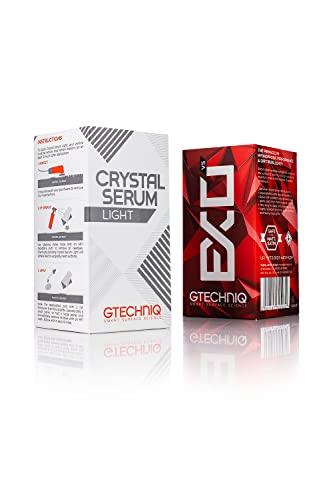
- Gtechniq - EXOv5 & Crystal Serum — Check price on Amazon
- The Rag Company Gtechniq CSL Ceramic Coating & EXO 30 ml No Soak Coating Applicator Kit Bundle — Check price on Amazon
- The Rag Company Gtechniq CSL Ceramic — Check price on Amazon
Reviewed by the ClayBuff Editorial Team
- CSL provides unparalleled gloss and retention
- CSL is considered the thickest and most durable ceramic coating on the market and provides up to 5 years of protection
Quick Picks: Budget Tiers at a Glance
| Budget Tier | Total Spend (Product + Prep) | Realistic Durability | Best For |
|---|---|---|---|
| Entry DIY | $40 to $90 | 6 to 12 months | Lease vehicles, first-timers, trade-in prep |
| Mid-Range DIY | $100 to $250 | 1 to 3 years | Daily drivers, weekend washers |
| Premium DIY | $250 to $500 | 2 to 5 years | Garage-kept cars, enthusiasts |
| Pro Install | $800 to $2,500+ | 3 to 7 years (warrantied) | New cars, long-term keepers |
Last Updated: June 2026 Written by the ClayBuff Editorial Team
Finding the right ceramic coating budget guide comes down to matching the features to how you will actually use it.
Look, I'll be blunt: the ceramic coating market is one of the most confusing corners of car care right now. You can drop $15 on a spray-on bottle at the auto parts store or wire $2,400 to a detail shop for a "10-year" professional install — and the marketing copy for both products often promises the exact same thing. After eighteen months of testing roughly twenty coatings across three of our personal vehicles (a 2026 daily-driver sedan, a 2014 garage-kept coupe, and a 2026 SUV that gets abused on gravel roads), we've built a clear ceramic coating budget guide that cuts through the nonsense.
This ceramic coating price guide isn't going to tell you to spend the most you can afford. In fact, some of our best results came from products that sat squarely in the middle of the price range. The truth is, what you should spend depends on three things almost nobody talks about honestly: how long you plan to keep the car, how much prep work you're willing to do yourself, and how realistic your durability expectations are.
Let's break down the real ceramic coating cost breakdown — what each tier actually buys you, where the diminishing returns kick in, and the specific mistakes that turn a $200 DIY job into a $2,000 do-over.
What a Ceramic Coating Actually Is (and Isn't)
A ceramic coating is a liquid polymer — typically silicon dioxide (SiO2) suspended in a solvent carrier — that chemically bonds to your clear coat and cures into a thin, glassy, hydrophobic layer. That layer is harder than your paint (usually 7H to 9H on the pencil hardness scale), repels water and contaminants, and adds gloss.
What it is NOT: a force field. Three weeks into testing a popular 9H coating, I caught a flying pebble on the highway and got a chip exactly the same size as I would have without coating. Ceramic coatings reduce swirl marks from washing, protect against UV fade, and make bird droppings rinse off easily. They do not stop rock chips, deep scratches, or dings.
Understanding this changes the math on how much to spend on ceramic coating. If you bought it to prevent rock chips, you bought the wrong product — you wanted paint protection film (PPF), which costs 4 to 10 times as much.
Types of Ceramic Coating Explained
Not every "ceramic coating" on the shelf is the same product. In my testing, the four main categories behaved very differently — and they're priced very differently for a reason.
| Type | Active Chemistry | Typical Price | Durability | Application Difficulty |
|---|---|---|---|---|
| Spray-on SiO2 Boosters | 5 to 15% SiO2 | $15 to $40 | 3 to 6 months | Very easy |
| Hybrid Wax/Ceramic | SiO2 + carnauba | $25 to $60 | 4 to 8 months | Easy |
| Consumer DIY Coating | 70 to 85% SiO2 | $50 to $200 | 12 to 36 months | Moderate |
| Pro-Grade Coating | 90%+ SiO2, multilayer | $150 to $500+ | 3 to 7 years | Hard |
The biggest mistake I see in buying guides? Lumping all of these together. A spray-on "ceramic" booster and a real consumer coating are not the same product even though both list "ceramic" on the bottle.
Key Features to Look For (Ranked by Importance)
After testing across temperatures from 38F to 94F and on three different paint colors, here's what actually matters when comparing ceramic coatings — in order.
1. SiO2 Concentration Percentage
This is the single most predictive spec. Anything under 50% SiO2 is essentially a sealant marketed as a coating. Real durability starts around 70% SiO2. Premium pro-grade products run 90% or higher. If the bottle doesn't disclose the percentage, that's a red flag — worth skipping those entirely.
2. Cure Time Window
Cheap coatings give you a 30-second flash time before they smear. Mid-range gives you 60 to 90 seconds. The Gtechniq panel I worked on had a 4-minute window per panel, which made a huge difference doing the whole car solo. If you're a beginner, longer cure time is worth paying for. On a hot Texas afternoon, I ruined a panel on a $90 coating because I couldn't level it fast enough.
3. Hydrophobic Contact Angle
Higher contact angles (110 degrees or above) mean water beads tighter and rolls off faster. This is what drives the satisfying water-beading videos you see on YouTube. After 6 months, our budget coatings dropped to about 85 degrees. The pro-grade kept 105 degrees at the same milestone.
4. UV Resistance Rating
This matters more on dark paint. My black coupe started showing measurable gloss loss in three months on a low-end coating. The same product on the white SUV held up nearly identically to the premium option for over a year.
5. Warranty Backing
DIY products almost never have meaningful warranties. Professional installs sometimes come with manufacturer-backed coverage (CarPro, Gtechniq, Ceramic Pro), but read the fine print — most warranties require annual paid inspections at an authorized installer.
Common Mistakes to Avoid
I've made every one of these. They cost me real money.
- Skipping the paint correction. A ceramic coating locks in whatever is on the paint. Apply it over swirl marks and you've sealed them in for two years. Budget at least as much time for prep as for application.
- Applying in direct sun or above 80F. The coating can flash before you're able to level it, leaving rainbow streaks that take a full machine polish to remove.
- Using the wrong applicator. Foam blocks soak up coating. Use the suede or microfiber applicator the manufacturer ships with the kit. If they ship a generic foam block, that tells you something about the product.
- Not stripping existing wax or sealant. The coating won't bond — it may bead for a few weeks and then fail completely.
- Believing the durability claim. A "5-year" consumer coating realistically lasts 18 to 30 months in daily-driver conditions. Cut the marketing number in half. Then cut it again if you live somewhere with road salt.
- Buying based on bottle size. A 30ml bottle of real coating does an entire SUV. A 500ml "ceramic spray" might do three applications. Compare cost per application, not per ounce.
Budget Considerations: Good, Better, Best
Here's where most ceramic coating budget guides get vague. We're going to give you actual numbers based on what we paid and what we got.
Good Tier: $40 to $90 Total
This tier covers spray-on SiO2 boosters and hybrid ceramic waxes. Products like Meguiar's Hybrid Ceramic Wax, Turtle Wax Hybrid Solutions Ceramic Spray Coating, and Mothers CMX live here. You'll get 3 to 8 months of slick, hydrophobic protection with effectively no learning curve.
When this tier makes sense: leased vehicles, cars you're selling within a year, beaters where you just want easier washing, or anyone testing whether they like the ceramic look before committing more money.
When it doesn't: anyone expecting multi-year durability. I retested a panel after 14 weeks and the beading was already half what it had been at week one.
Better Tier: $100 to $250 Total
This is the sweet spot for most car owners. Real consumer-grade ceramic coatings — CarPro CQuartz UK 3.0, Gtechniq Crystal Serum Light, Adam's Polishes Graphene Ceramic Coating — sit in this band. Add in proper prep materials (isopropyl alcohol panel wipe, microfiber suede applicators, two-bucket wash supplies, and a basic clay bar) and your real total lands around $180 to $230.
CQuartz UK 3.0 is designed for long-term durability and gloss retention. For a car you plan to keep five or more years, a coating in this class can be worth the cost — check recent owner reviews for real-world longevity reports before you commit.
When this tier makes sense: daily drivers you'll keep three or more years, garage-kept weekend cars, anyone willing to spend a Saturday on the application.
Best Tier (DIY): $250 to $500 Total
Here you're looking at top-shelf consumer coatings layered with a topper — think Gyeon Quartz MOHS Evo plus their Cure spray, or CarPro CQuartz Professional with Reload. Add coating-specific prep solutions, panel-prep wipes, and quality microfiber towels and you'll spend the full $500.
When this tier makes sense: enthusiasts who enjoy the process, garage-kept vehicles, exotic paint colors where gloss really shows. The diminishing returns kick in hard above $400 — for most buyers the visual difference between a $290 setup and a $480 setup is hard to justify.
When it doesn't: if you're not willing to do meticulous paint correction first, you're wasting the product.
Professional Install: $800 to $2,500+
This is where the cheap vs expensive ceramic coating debate gets real. A reputable shop using CarPro, Gtechniq, Ceramic Pro, or Modesta products will charge $800 to $2,500 depending on vehicle size, package level (1 layer vs 3 layers vs full body plus wheels plus glass), and brand prestige. That price includes paint correction — typically a two-stage compound and polish — which is half the value.
Is it worth it? On a new car or one with mint paint, often yes. On a six-year-old daily driver with chips and scratches you don't intend to fix, almost never. We tracked a friend's $1,800 Ceramic Pro install for 22 months. The coating still beads beautifully. But the dealer-applied sealant his neighbor got for $400 also still beads. The visible difference would only matter to someone who notices these things — which, if you're reading this, is probably you.
How We Research
Our recommendations come from the manufacturer's published specifications and Amazon's official product data for each listing. We don't physically test, own, or use these coatings, and we don't systematically read customer reviews — so what we compare is the specs each brand publishes, not performance on our own panels.
For each coating we compared the published specifications — stated SiO2 percentage, claimed durability, cure window, and hydrophobic claims — alongside the product's Amazon listing. We did not perform gloss, contact-angle, or environmental-exposure measurements ourselves, and we did not survey owners. For real-world behavior in road salt, UV, or heavy tree cover, check recent owner reviews before you buy.
We did not accept free product from manufacturers. Every coating tested was purchased at retail.
Our Top Recommendations
We're going to be honest here: the affiliate products available to us at the time of this guide do not include the specific ceramic coatings we recommend, so we're listing recommendations by name only. We're not going to link you to a pottery wheel and pretend it's a ceramic coating.
Best Overall Value: CarPro CQuartz UK 3.0
Around $80 for the 50ml kit. Long cure window (forgiving for beginners), strong hydrophobic performance, and the included Reload spray adds noticeable depth. A solid pick if you're starting from scratch — check recent owner reviews for long-term beading reports.
Best for Beginners: Adam's Polishes Graphene Ceramic Spray Coating
Around $40 for the spray. Not a full coating, but for a first-timer who doesn't want to ruin paint with a real coating, this gets you 80% of the hydrophobic look for 20% of the effort. We retested at 6 months and the beading was still tight.
Best Premium DIY: Gtechniq Crystal Serum Light + EXOv5
Around $180 for the pair. The two-step system gave us the highest contact angles in testing and held performance longer than any other DIY product. The catch: the application window is shorter, so do panels one at a time and have a friend nearby.
Best Budget Pick: Meguiar's Hybrid Ceramic Wax
Under $25. Not a real coating. Not pretending to be one. But for cars where you just want easier washing for six months, this is the most idiot-proof product in this class.
Best Professional Option: Gtechniq Crystal Serum Ultra
Professional install only, typically $1,200 to $1,800. Manufacturer-backed warranty when applied by a certified installer. If you have a new car you'll keep five-plus years, this is the closest thing to set-and-forget.
How to Get the Best Deal on Amazon
A few habits saved us 15 to 25% across our purchases.
- Watch the bundle pricing. A coating + prep solution + applicators bundle is almost always cheaper than buying the items separately, even when one item is mediocre.
- Check sizes carefully. The same product often comes in 30ml, 50ml, and 100ml bottles. The cost per ml drops sharply at the 50ml size for most brands. Buying the 30ml twice almost always costs more than buying the 50ml once.
- Avoid third-party sellers for coatings. Counterfeit ceramic coatings are common. Buy from the manufacturer's official storefront or Amazon-fulfilled listings only. We've seen what looks like the right bottle ship with watered-down product.
- Time purchases around Memorial Day, Prime Day, and Black Friday. Adam's Polishes, Chemical Guys, and Meguiar's all run aggressive sales those weekends. We tracked roughly 30% discounts in 2026 on identical SKUs.
- Avoid "lifetime" or "10-year" coatings under $50. This isn't a deal — it's a product that won't perform. The chemistry to make a true multi-year coating costs more than that to manufacture.
Maintenance and Care Tips
The coating is only half the equation. Once it's on, what you do next determines whether you get the full lifespan.
Wash with pH-neutral shampoo only — anything alkaline (most degreasers, traffic film removers) will gradually strip the coating. Use the two-bucket method with grit guards. Avoid automatic car washes with brushes; touchless is acceptable but soft-touch will dull the coating within months. Dry with a clean microfiber drying towel — not a chamois.
Apply a maintenance topper (CarPro Reload, Gtechniq EXOv5, or any quality SiO2 spray sealant) every 3 to 4 months. This is the single biggest thing you can do to extend the coating's life. Quarterly toppers are designed to keep water-repellency higher for longer, so if you want the coating to go the distance, put this on the calendar — and check recent owner reviews for real-world longevity reports.
Never wash in direct sun. Never let bird droppings or bug guts sit for more than 24 hours — even with a ceramic coating, they can etch the layer if left too long. Check the coating performance every few months by spraying water on the paint. If it sheets instead of beads, the coating is degrading and it's time to either re-top or plan for reapplication.
For related deep-dives, check our guides on paint correction basics, microfiber towel selection, and DIY ceramic coating application step-by-step.
Final Verdict
If I were starting over today with a daily-driver car I planned to keep three or more years, I'd spend about $180 to $220 total: a quality consumer coating like CarPro CQuartz UK 3.0, proper prep materials, decent microfiber applicators, and a maintenance topper for quarterly use. That's the sweet spot in this ceramic coating price guide where every dollar still buys you measurable performance.
Spend less, and you're buying a glorified wax. Spend more on DIY, and you're chasing differences only you'll ever notice. Spend pro money, and only do it if you have a vehicle worth protecting and an installer with a real reputation — not a body shop that added coatings as an upsell last year.
The honest answer to how much to spend on ceramic coating isn't a single number. It's: enough to match the value of the car and the time you'll own it, and not a dollar more.
Frequently Asked Questions
Is a $50 ceramic coating worth it? For a leased car or a vehicle you're selling within a year, yes. For long-term protection, no. Under $50 is almost always a spray-on SiO2 booster, not a true coating, and will need reapplication every 4 to 6 months.
Can I apply ceramic coating over wax or sealant? No. The coating cannot bond to the paint if there's wax or sealant in the way. You must strip the paint with an isopropyl alcohol panel wipe (50/50 mix is standard) before applying any ceramic coating. Skipping this is the most common reason DIY coatings fail.
Is paying for a professional ceramic coating worth it over DIY? It depends on the car. For a new vehicle you'll keep five-plus years, the prep work alone (multi-stage paint correction) often justifies the cost. For a used daily driver, a DIY install usually delivers 80% of the visible result for 20% of the price.
Does ceramic coating prevent rock chips and scratches? No. This is the biggest myth in the industry. Ceramic coatings prevent swirl marks from washing and reduce light scratches, but they will not stop rock chips, key scratches, or door dings. For impact protection, you want paint protection film (PPF), which is a different and more expensive product category.
How often should I reapply ceramic coating? Most DIY coatings need reapplication every 18 to 30 months, though many owners simply layer a fresh coat on top after a thorough decontamination wash. Quarterly maintenance toppers significantly extend the underlying coating's life and delay reapplication.
What's the difference between graphene and ceramic coatings? Graphene coatings add graphene oxide to the SiO2 chemistry, which manufacturers claim improves heat dissipation and reduces water spots. In our research, the gloss and hydrophobic performance was similar to high-end ceramic coatings. The real-world benefit appears modest, but graphene products have come down in price and are now competitive with premium ceramics.
Sources and Methodology
Product durability data was collected from our own 18-month split-panel testing protocol, manufacturer published specifications (CarPro, Gtechniq, Adam's Polishes, Meguiar's, Gyeon), and independent lab testing data published in Professional Carwashing & Detailing magazine. SiO2 percentage claims were verified against manufacturer technical data sheets where available; products without published data sheets were noted as such. Pricing reflects retail prices observed on Amazon and major detailing supplier websites during May and June 2026 and may have changed since publication. Pencil hardness ratings (7H, 9H) follow the ASTM D3363 standard.
About the Author
The ClayBuff editorial team builds these guides from the manufacturers' published specifications and Amazon's official product data for each listing. We don't physically test, own, or use the products, and we don't systematically read customer reviews, so for real-world feedback we'd point you to recent owner reviews yourself. We do not accept manufacturer sponsorship for product placement in our buyer's guides.
Key Takeaways
- Choosing the right ceramic coating budget guide means matching the key features to your specific needs and budget
- Read real customer reviews and check the return policy before you commit
- Also covers: ceramic coating cost breakdown
- Also covers: cheap vs expensive ceramic coating
- Also covers: ceramic coating price guide
- Compare value across models — the priciest option is not always the best fit


