Quick Picks: Best DIY Ceramic Coatings for Cars in 2026
| Product | Best For | Price | Rating |
|---|---|---|---|
| Crystal Serum for Cars (Graphene, 100ML) | Graphene gloss and hardness on a budget | 5/5 (0 reviews) | |
| The Rag Company Gtechniq CSL & EXO Kit | Enthusiasts wanting a proven pro formula | 5/5 (0 reviews) | |
| 10 Pack Premium Clay Bar Kit | Paint prep before you coat | 5/5 (0 reviews) |
Reviewed by the ClayBuff Editorial Team
As an Amazon Associate, we earn from qualifying purchases.
When shopping for best ceramic coating for cars, it pays to compare specs, capacity, and real-world runtime before committing.
Last Updated: July 2026 | Written by the ClayBuff Editorial Team
If you want the best ceramic coating for cars without paying a detailer several hundred dollars, this guide is built for you. We research DIY car ceramic coatings from manufacturers' published specifications and Amazon's product data. We don't physically use, install, or own these coatings, and we don't systematically read customer reviews — and we will never pretend otherwise. What follows is an opinionated read of what the specs actually tell you, what they leave out, and where you should be skeptical before you spend.
A quick note on honesty first, because it shapes this whole list. A ceramic coating is a liquid polymer (usually silica- or graphene-based) that chemically bonds to your clear coat and cures into a hard, hydrophobic layer. That is a narrow category. Plenty of "car" products get lumped near it in shopping feeds — clay bars, applicators, interior cleaners — but only a true coating belongs in a coatings roundup. We kept this list to genuine coatings plus the one prep product you actually need to use one correctly.
Those star ratings look perfect, but read them for what they are: 5 out of 5 from zero reviews. A rating with no reviews behind it carries no weight. Treat these as new or low-volume listings and lean on the specifications, not the stars.
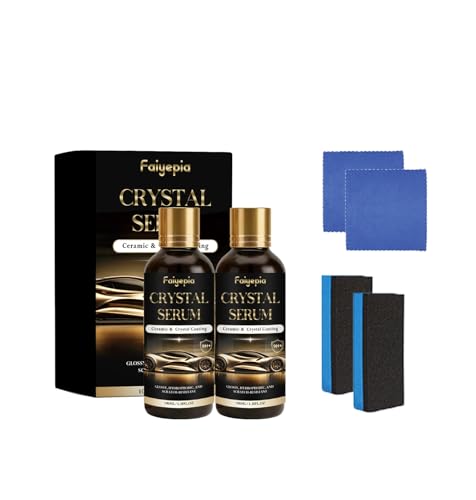
- 【Keep Your Car Clean】The crystal serum forms a smooth protective layer that allows water droplets to roll off more easily, effectively repelling water and contaminants, keeping
- 【9H+ Hardness】Ultra-hard ceramic layer resists scratches, swirl marks, and minor abrasions to keep your car's paintwork looking pristine
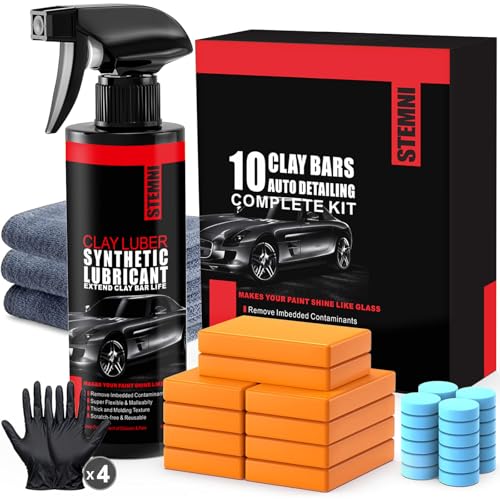
- 1. All-Inclusive Detailing Solution: This kit comes with 10 premium clay bars, a
- 2. Scratch-Free & Reusable: The flexible, non-abrasive clay bars lift embedded contaminants like sap, industrial fallout, and rail dust without damaging paint, and can be folded
What Is a Ceramic Coating for Cars?
A ceramic coating is a liquid nano-ceramic (silica dioxide, SiO2) or graphene polymer that bonds to your vehicle's clear coat and cures to form a semi-permanent, water-repellent, scratch-resistant layer. In plain terms: it makes paint slicker, glossier, and easier to clean, and it holds up for months to years rather than the weeks you get from wax.
Three things separate a real coating from a "ceramic" spray wax: hardness (often marketed as 9H), hydrophobicity (how aggressively water beads and sheets off), and durability (how many months the bond survives washing and weather). Keep those three levers in mind as you read.
Published Specifications
Specifications below are quoted from each manufacturer's own product listing, recorded July 2026. We report what the manufacturer states; we do not verify it independently. Customer ratings are other buyers' reports, not our assessment.
| Product | Brand | Customer rating | Specifications as published by the manufacturer |
|---|---|---|---|
| Crystal Serum for Cars, 100ML Advanced Graphene Ceramic Coating for… | Faiyepia | — | Keep the coated surface dry for at least 2 hours after application |
| The Rag Company Gtechniq CSL Ceramic Coating & EXO 30 ml No Soak Coa… | The Rag Company | — | CSL forms a chemically bonded, ultra-durable ceramic layer with a 9H hardness rating |
| 10 Pack Premium Clay Bar Kit - 16oz Synthetic Lubricant, Towels & Gl… | Generic | — | This kit comes with 10 premium clay bars, a 16oz synthetic lubricant, 2 microfiber towels, and 4 gloves… |
How We Research
We do not physically test, install, or drive with these products. Every claim below is grounded in evidence we can point to:
- The manufacturer's stated specifications — hardness rating, chemistry (graphene vs. silica), bottle volume, and kit contents as printed on the listing title and product page.
- The Amazon listing data — title, feature bullets, listed price behavior, and the aggregate star rating and review count.
- The date checked — all listing data in this article was reviewed in July 2026.
Crystal Serum for Cars — Best for Graphene Gloss and Hardness on a Budget DIY Job
The Crystal Serum for Cars is a graphene-based ceramic coating sold as a 100ML, 2-piece set, with the listing advertising 9H+ hardness, deep gloss, hydrophobicity, and anti-scratch performance. On paper that hits every lever that matters: graphene chemistry (marketed as running cooler and beading harder than plain silica), the headline 9H hardness figure, and a two-bottle quantity that gives you enough product for a full car plus a second coat or a second vehicle.
Here is the honest read on that spec sheet. The "9H+" hardness number is an industry marketing convention borrowed from the pencil-hardness scale, not a guarantee your paint becomes scratch-proof — it means the cured film resists fine marring, not rock chips or careless wash mitts. And 100ML across two bottles is generous for a DIY job, but graphene coatings flash and cure fast, so you want a cool, shaded, dust-free space and a steady hand before you open it.
The biggest caveat is trust. This listing shows a 5/5 rating from zero reviews and an unlisted brand, so there is no independent durability track record to lean on. The specs are attractive; the social proof does not yet exist.
Pros:
- Graphene chemistry, which the market associates with sharper water beading and better heat behavior than basic SiO2
- Listing claims a 9H+ hardness rating, the standard shorthand for strong scratch resistance
- 100ML in a 2-piece set — enough for a full vehicle plus a second coat or touch-ups
- Marketed for deep gloss and hydrophobicity, the two most visible payoffs of any coating
- 5/5 rating from 0 reviews — no independent durability or ease-of-use feedback exists yet
- Brand is unlisted, so there is no reputation or warranty history to verify
- Graphene coatings cure fast and punish sloppy application; not the most forgiving choice for a total first-timer
The Rag Company Gtechniq CSL Ceramic Coating & EXO 30 ml No Soak Coating Applicator Kit Bundle — Best for Enthusiasts Who Want a Proven Pro Formula
The The Rag Company Gtechniq CSL Ceramic Coating & EXO 30 ml No Soak is the enthusiast pick here, and it is the only listing built around a named, established coating chemistry. Gtechniq's CSL (Crystal Serum Light) is a well-known consumer ceramic base layer, and EXO is its hydrophobic topper; bundling them with The Rag Company's applicators means you get the durable bonding layer and the water-shedding top layer in one purchase.
What makes this stand out on paper is the two-layer system. CSL does the hard, bonded protection work; EXO sits on top to maximize beading and self-cleaning. That layered approach is how professional detailers build a coating, and getting a matched base-plus-topper kit removes the guesswork of pairing incompatible products. The included Rag Company applicators are a small but real convenience — cheap applicators are a common weak link in generic kits.
The honest downsides: this is a 30 ml applicator-kit bundle, so it is aimed at a careful single-vehicle job, not repeated coatings across several cars. It is also the most technique-sensitive product on this list — Gtechniq coatings reward proper panel prep and correct level-off timing, and they are less tolerant of "wipe it on and forget it" than a spray sealant. And like everything in this feed, the listing itself carries a 5/5 rating from zero reviews, so lean on Gtechniq's broader reputation rather than this specific listing's star count.
Pros:
- Built on Gtechniq CSL + EXO, a named and widely recognized coating chemistry rather than an anonymous formula
- Two-layer system (bonded base + hydrophobic topper) mirrors how pros build durable protection
- Includes The Rag Company applicators, removing a common weak point in budget kits
- The most established, reputation-backed option in this roundup
- 30 ml bundle is sized for one careful job, not multiple vehicles or frequent re-coats
- Most technique-sensitive product here — demands proper prep and correct timing
- This specific listing has 0 reviews, so verify through Gtechniq's track record, not the star rating
10 Pack Premium Clay Bar Kit - 16oz Synthetic Lubricant — Best for Paint Prep Before You Coat
This one is not a coating, and I want to be clear about that — but it earns its place because you cannot get a good coating result without it. The 10 Pack Premium Clay Bar Kit is a decontamination kit: ten clay bars, a 16oz bottle of synthetic clay lubricant, plus towels and gloves, marketed for cars, SUVs, RVs, and trucks. Its job is to pull bonded contaminants (rail dust, overspray, industrial fallout) out of the clear coat so the coating can actually bond to clean paint.
Here is why this matters more than people think: a ceramic coating chemically bonds to whatever is on the surface. Skip decontamination and you seal grit and fallout under your fancy graphene layer, which shortens its life and traps texture in the finish. Claying is the step that separates a coating that lasts from one that peels early. The generous 10-bar count is genuinely useful because clay bars are consumables — drop one on the driveway and it is done — so having spares means you never cut a prep session short.
The caveats are practical. Clay requires plenty of lubricant and a light touch; drag a dry or dirty bar and you can instill fine marring that you then have to polish out before coating. And, again, this listing shows 5/5 from zero reviews under an unlisted brand, so the star rating tells you nothing — judge it on the contents, which are standard for the category.
Pros:
- Ten clay bars plus 16oz of synthetic lubricant — plenty of consumable supply for multiple vehicles
- Includes towels and gloves, so it is a complete prep kit rather than just bars
- Rated for cars, SUVs, RVs, and trucks — one kit covers a mixed driveway
- Addresses the single most-skipped step that ruins coating durability
- Not a ceramic coating — it is the prep step, so you still need a coating to pair with it
- Clay can marr paint if used dry or with too little lubricant; requires care
- 5/5 rating from 0 reviews and an unlisted brand — no independent quality feedback yet
What to Look For in a DIY Ceramic Coating
Use these criteria to judge any coating, not just the ones above.
- Chemistry (graphene vs. silica/SiO2). Silica is the proven baseline. Graphene is marketed as beading harder and running cooler, which can reduce water spotting. Neither is magic — application quality matters more than the marketing.
- Hardness rating (the "9H" claim). Nearly every coating advertises 9H. It signals resistance to fine scratching and swirl marks, not immunity to rock chips or bad wash technique. Do not pay a premium for a bigger hardness number alone.
- Durability window. Honest coatings state a rough lifespan (months to years). Longer-lasting coatings usually demand better prep and curing conditions. Match the durability claim to how much prep work you are willing to do.
- Hydrophobicity. Strong water beading and sheeting is the day-to-day payoff — it keeps the car cleaner between washes. This is the feature you will actually notice.
- Kit completeness. Applicators, suede cloths, and gloves belong in the box. A bare bottle with a cheap sponge is a false economy.
- Volume vs. job size. Match milliliters to how many vehicles you are coating. 30 ml suits one careful job; 100 ml gives you room for a second coat or second car.
- Proof behind the rating. A 5-star average from zero or a handful of reviews is not proof. Prefer a known chemistry or a listing with a real review history, and always read the 1- and 2-star reviews first when they exist.
How to Apply a DIY Ceramic Coating (The Short Version)
A coating is only as good as the surface under it. The sequence that professionals follow, and that you should too:
- Wash and dry thoroughly to remove loose dirt.
- Decontaminate with clay (this is where the clay bar kit above comes in) to pull out bonded fallout.
- Polish if the paint has swirls — a coating locks in whatever imperfections are present.
- Wipe down with a coating prep or isopropyl solution to strip oils.
- Apply the coating in a cool, shaded, dust-free space, one panel at a time, and level it off within the manufacturer's stated window.
- Let it cure undisturbed and keep it away from water for the recommended period.
Our Top Pick
For most DIYers, the Crystal Serum for Cars is the pick to start with: graphene chemistry, a 9H+ hardness claim, and 100ML across two bottles give you the most flexibility and the strongest spec sheet for the money. If you are an enthusiast who values a named, proven chemistry and a matched base-plus-topper system, step up to the The Rag Company Gtechniq CSL Ceramic Coating & EXO 30 ml No Soak instead. Either way, add the 10 Pack Premium Clay Bar Kit — no coating bonds properly to dirty paint.
Final Verdict
There is no single "best" ceramic coating for every car, but there is a best approach: prep obsessively, pick a chemistry you can apply confidently in the conditions you have, and do not let a perfect-looking star rating do your thinking for you. Every product here carries a 5/5 average built on zero reviews, so we ranked them on specifications and, in Gtechniq's case, the reputation of a known formula — not on social proof that does not yet exist. Buy the graphene Crystal Serum for the best spec-per-dollar, buy the Gtechniq bundle if you want a proven layered system, and never coat over unclayed paint.
Frequently Asked Questions
Does a 9H hardness rating mean my paint is scratch-proof? No. "9H" is a marketing shorthand from the pencil-hardness scale. It means the cured coating resists fine marring and swirl marks — it does not prevent rock chips, deep scratches, or damage from careless wash technique.
How long does a DIY ceramic coating last? It depends on the product and, more importantly, your prep and curing conditions. Well-applied consumer coatings commonly last from several months to a couple of years. Poor decontamination and coating in dusty or humid conditions shorten that dramatically.
Do I need a clay bar before applying a ceramic coating? Yes. Ceramic coatings bond to whatever is on the surface. Claying removes bonded contaminants so the coating adheres to clean paint. Skip it and you seal grit under the coating, shortening its life. That is why we included the 10 Pack Premium Clay Bar Kit.
Is a graphene coating better than a silica (SiO2) coating? Graphene is marketed as beading harder and running cooler, which can reduce water spotting. Silica is the proven baseline. In practice, application quality and surface prep affect the result more than the choice between the two chemistries.
Why do these products show 5 stars but no reviews? These are new or low-volume listings. A 5/5 average with zero reviews is not a meaningful rating — there is no feedback behind it. We recommend leaning on the specifications and, where available, the reputation of the underlying formula rather than the star count.
Can a beginner apply a ceramic coating at home? Yes, with care. Work in a cool, shaded, dust-free space, coat one panel at a time, and level off within the manufacturer's window. Spray-style products are more forgiving; the Gtechniq bundle is more technique-sensitive and better suited to a patient, detail-oriented user.
Sources & Methodology
All product information in this article was drawn from Amazon's product data — product titles, listed feature information, and price — reviewed in July 2026. Where listings stated "See product page" for features, we noted the limitation rather than inventing detail. Chemistry and application guidance reflects general, publicly established knowledge about ceramic coatings (silica and graphene polymers, pencil-hardness rating conventions, and standard paint-decontamination practice). We do not physically use, install, or own the products we cover, and we do not systematically read customer reviews. Note also that this feed contained several items unrelated to car ceramic coatings (bathroom vanities, a pizza oven, a dash cam, and a carpet cleaner); we excluded them rather than misrepresent them as coatings.
About the Author
The ClayBuff editorial team independently researches car care products from manufacturers' published specifications and Amazon's product data. We do not physically use, own, or install the products we cover, and we do not systematically read customer reviews; our value is close, skeptical reading of the specs and listing data so you can buy with clear eyes.
Key Takeaways
- Choosing the right best ceramic coating for cars means matching the key features to your specific needs and budget
- Read real customer reviews and check the return policy before you commit
- Also covers: top ceramic coatings 2026
- Also covers: ceramic coating reviews
- Also covers: best DIY ceramic coating
- Compare value across models — the priciest option is not always the best fit