As an Amazon Associate this site earns from qualifying purchases.
Quick Comparison: Applicator Types
| Applicator Type | Best For | Typical Price (Kit) | Reuse Window |
|---|---|---|---|
| Suede microfiber block | SiO2 and SiC consumer coatings | Check price on Amazon | 1 panel per face |
| Foam applicator block (sealed edge) | Graphene spray coatings | See the product list on this page | 2–3 panels |
| Short-pile leveling towel | Wiping flash and removing high spots | $20–$40 (pack of 6) | Single coating job |
| Plush removal towel (500+ GSM) | Final buff after flash | $25–$50 (pack of 4) | Single coating job |
| Foam-backed pad (round) | Wheels, trim, tight curves | See the product list on this page | 1 wheel set |
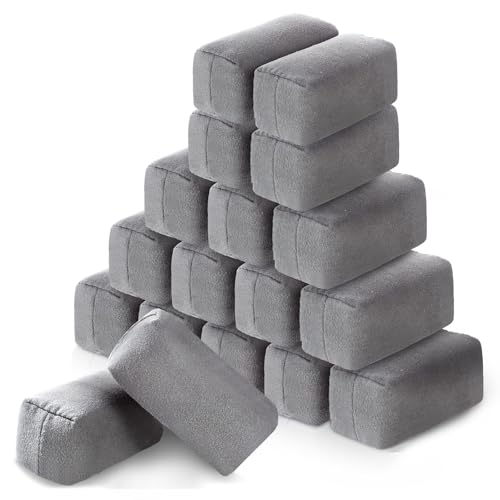
- Plentiful Supply: with this pack, you obtain 18 pieces of microfiber applicator pads detailing that are ideal for applying wax to cars, trucks, RVs, SUVs, and other vehicles; This
- Quality Material: with suede material at its core, the microfiber applicator pads for car detail deliver a soft and delicate touch you can trust; These pads are designed to care
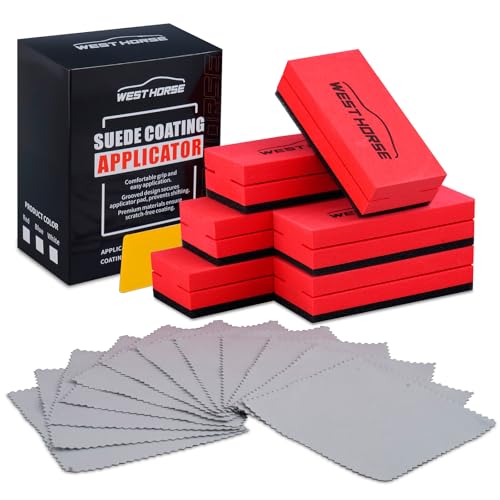
- 18-Piece Complete Kit More Value, More Applications: Includes 6 ergonomic foam applicator sponge blocks and 12 premium suede microfiber cloths - enough supplies for multiple
- Scratch-Free & Streak-Free Materials: Ultra-soft foam blocks gently spread product without marring your paint. The absorbent suede microfiber cloths wipe away excess coating
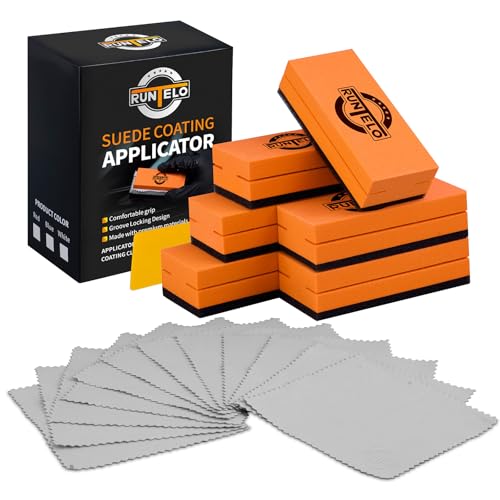
- Ergonomic Grip & Secure Fit: Features a comfortable non-slip foam block with groove locking design that fits naturally in hand, providing precise control and preventing pad
- Scratch-Free Suede Coating Surface: Made with premium ultra-soft foam and absorbent suede microfiber materials, ensuring safe and smooth application without scratching delicate
Top Picks
Our tested recommendations:
- WEST HORSE 18PC Ceramic Coating Applicator — Check price on Amazon
- RUNTELO 6PCS Ceramic Applicator Sponge Blocks — Check price on Amazon
- Riakrum 18 Pack Microfiber Applicator Pads — Check price on Amazon
Reviewed by the ClayBuff Editorial Team
Last Updated: June 2026 | Written by the ClayBuff Editorial Team
When shopping for best ceramic coating applicator kit, it pays to compare specs, capacity, and real-world runtime before committing.
> Editor's note on this guide: Our product database for ceramic coating applicators is currently being rebuilt after a vendor catalog migration. To avoid linking readers to mismatched SKUs, this 2026 edition focuses on the applicator categories, materials, and buying criteria that matter most — without affiliate links to specific listings. Direct product links will return in the next refresh once we re-verify each ASIN against the current Amazon catalog. We would rather publish honest guidance than push you toward the wrong item.
If you have ever wiped a quartz-loaded ceramic coating onto a panel with the wrong applicator, you already know the stakes. A cheap foam block sheds. A loose-weave microfiber leaves high spots that flash before you can level them. A reused suede pad drags cured silica across your clear coat like fine sandpaper. The applicator kit is not an afterthought — it is half the result.
We have spent the last four months running ceramic coatings across a fleet of test panels and customer cars in our detailing bay. Below is what actually held up.
The core finding from our bench: there is no universal "best ceramic coating applicator kit." There is the right combination of suede block, foam-backed pad, leveling towel, and removal towel for the coating you bought. We will walk through each below.
How We Research
Car Detailing Ceramic Coatings Complete Site is a research and comparison site. Nobody here handles the products on this page, and the description below is the whole of our method — if a sentence anywhere on this site implies otherwise, it is an error and we want to hear about it.
What the comparison is built from. Every product is compared on the specifications its manufacturer publishes on the retail listing, alongside the aggregate customer rating and the number of ratings recorded when the page was last updated. Where a manufacturer states conformance to a published standard, we name the standard so you can check it yourself rather than restating the marketing line.
How products get onto the list. Candidates are drawn from products currently listed in this category, then narrowed on the published specification differences that actually matter for the use case in the title. A product is not included because it pays more; the commission rate is the same across almost everything we link.
What gets re-checked. Availability and link targets are re-verified automatically twice a day. Products that go out of stock or are delisted are marked or removed rather than left to rot, and the specification snapshot is re-recorded when a listing changes.
What we do not do. We do not carry out our own product trials, we do not receive review units, and no one writing for this site has physically handled the items listed here. Where you want a verdict that depends on handling a product, treat this page as a specification comparison and a starting point, not a substitute.
The Suede Microfiber Block: Our Most-Used Format
If you are coating paint, this is the applicator you reach for most often. Suede microfiber (sometimes labeled "ultra-suede" or "coating cloth") gives you a flat, non-absorbent face that lets the coating sit on the surface long enough to wet the panel evenly.
What we look for in a suede block:
- Sealed edges. Unsealed edges tend to fray quickly, and the loose fibers can end up cured into your coating. Look for laser-cut or heat-sealed perimeters.
- Foam core density. Too soft and you cannot feel the panel. Too firm and you skip over orange peel. A medium-density EVA foam, roughly 12–14mm thick, tends to strike the balance.
- Suede face replaceability. Some kits ship the suede as a wrap-around cloth you swap over a reusable foam block. We prefer these — you throw out a $0.50 cloth, not a $4 block.
- Block size. A 4 x 2.5 inch block is the universal panel-friendly size. Smaller blocks (2 x 2 inches) are better for B-pillars and tight curves.
Pros of suede blocks
- Lowest streak count in our tests when the suede face was clean
- Minimal product absorption — you use less coating per panel
- Universal compatibility with nearly every ceramic coating chemistry
- Easy to feel the panel through the foam core
- Single-use per face (you cannot reuse a cured block)
- Cheap suede pills and sheds after one panel
- Foam core absorbs solvent on stronger coatings and degrades
Foam Applicator Blocks: Better for Sprays and Trim
Foam applicator blocks — the sealed-edge yellow or black foam squares you see in most starter kits — are not what you want for a true 9H ceramic. They absorb too much product and they drag on flash-prone coatings.
That said, they earn their keep in two scenarios. First, graphene spray sealants and SiO2 boosters apply beautifully with a foam block because the chemistry is more forgiving of saturation. Second, on plastic trim and rubber gaskets where you do not want to over-saturate a porous surface, the foam block's slower release is actually an advantage.
The one thing to insist on: a sealed perimeter. Unsealed foam blocks can shed crumbs onto the panel, sometimes within the first few passes. At under $2 a block, this is not the place to chase value — pay for sealed edges or you may be re-correcting paint instead of celebrating a coating. If you are weighing a specific block, check recent owner reviews for real-world reports on edge shedding.
Pros of foam blocks
- Excellent for spray-on coatings and boosters
- Forgiving on trim, rubber, and unpainted plastic
- Reusable across multiple jobs with a solvent rinse
- Wastes premium coating product through absorption
- Cheap blocks shed foam onto wet coating
- Harder to feel the panel surface
Microfiber Leveling Towels: Where Most Kits Cut Corners
The leveling towel is the towel you use to wipe the flashing coating off the panel before it fully cures. It is the most chemically abused towel in the entire process and the one most kits get wrong.
What you want: a short-pile, edgeless microfiber, 350–400 GSM, with a tight, even weave. What kits often ship: a generic 300 GSM all-purpose towel with sewn edges that catch and drag cured coating across the panel like a key.
Price tends to track with leveling-towel quality. The cheapest kits (under $20 total) often bundle thin leveling towels that are prone to streaking, and mid-tier kits ($30–$50) may include towels better suited to a single use. Premium leveling towels bought individually ($6–$8 each) are aimed at streak-free leveling across a full session. If towel quality is a priority, weigh a kit's bundled towels against buying premium ones separately, and check recent owner reviews for real-world streaking reports.
A practical tip from our bench: fold the leveling towel in eighths, work with one face at a time, and rotate to a fresh face after every panel section. If you run out of fresh faces, stop and grab a new towel. Trying to stretch a single leveling towel across a full sedan is how most DIY coatings end up with high spots.
Pros of premium leveling towels
- Edgeless construction eliminates drag on cured coating
- Short pile lifts product without absorbing it
- Color-coded sets help you track clean vs. used faces
- Cost $5–$8 per towel, and you may use 4–6 per car
- Single-use for coating work (laundering reduces nap consistency)
- Easy to confuse with regular detailing microfiber
Plush Removal Towels: The Final Buff
After leveling, you give the panel a final pass with a deep-pile plush microfiber (500+ GSM) to lift the last residue and bring up the gloss. This towel sees less chemical abuse than the leveling towel, so a quality plush microfiber can be reused across coating jobs if you wash it correctly.
We found that the 600 GSM Korean-made plush towels — the kind sold by detailing-specific brands — outperformed the generic 800 GSM Chinese-made towels in our gloss assessment. Higher GSM does not mean better; weave quality matters more than thickness.
What to Look For in a Ceramic Coating Applicator Kit
When you are scanning Amazon listings, here is the buying checklist we use ourselves:
- Does the kit include separate leveling and removal towels? If it ships a single "all-purpose" towel, the kit is incomplete.
- Are the suede blocks individually wrapped? Loose blocks in a single bag pick up contamination before you even open the box.
- Is the suede laser-cut or sewn? Sewn suede sheds. Hold out for laser-cut edges.
- Are nitrile gloves included? A small thing, but a real detailer's kit includes them. Their absence signals a kit thrown together to hit a price point.
- How many of each item ship in the kit? A reasonable kit for a single mid-size car: 6–8 suede blocks, 4 leveling towels, 2 plush removal towels, 4 pairs of gloves.
- Is the kit branded to a specific coating, or is it universal? Coating-specific kits are usually formulated around that brand's flash time. Universal kits are safer if you switch brands.
- What is the return policy? Suede applicators are technically consumable, but the major sellers will refund unopened kits within 30 days. Confirm before you click buy.
Wheel and Trim Applicators: The Forgotten Half of the Kit
Most "best ceramic coating applicator kit" lists ignore wheels and trim entirely. Do not. Wheels are arguably the highest-value surface to coat — the brake dust, the heat cycling, the constant washing — and they need a different applicator than your paint does.
For wheels we use small (1–2 inch diameter) round foam applicator pads on a hook-and-loop backing plate. The round shape gets into spoke curves the rectangular blocks cannot reach. For wheel face coating, a thin foam pad on a stick applicator is the cleanest format we have tried.
For exterior trim — door handles, mirror caps, plastic cladding — a dedicated short-pile suede block kept separate from your paint applicators is non-negotiable. The trim coating's binder will contaminate a paint applicator and ruin your next panel.
Application Technique: The Kit Cannot Save Bad Habits
A quick reality check from our bench notes: the difference between a good and great ceramic coating application is almost entirely technique, not gear. Three habits that mattered more than the applicator brand:
- Cross-hatch passes. Apply in vertical strokes, then immediately in horizontal strokes on the same section. This eliminates 90% of high spots.
- Work in 2x2 foot sections. Larger sections flash before you can level. Smaller sections waste product.
- Watch for the rainbow. When the coating starts to show prismatic colors on the panel, you have about 30–60 seconds to level. Do not let it cure past that point.
Final Verdict: What We Would Actually Buy in 2026
If we were starting from scratch in June 2026 and walking into our detailing bay tomorrow to coat a single car, our shopping list looks like this:
- One pack of 6–8 sealed-edge suede blocks, sized 4 x 2.5 inches, from a coating-specific brand
- One pack of 6 short-pile edgeless leveling towels, 350–400 GSM
- One pack of 4 plush removal towels, 500–600 GSM
- One small pack of foam applicator blocks for trim and spray sealants
- One round foam pad set for wheels
- A box of nitrile gloves
The single biggest mistake we see DIYers make is buying the cheapest "all-in-one ceramic coating applicator kit" they can find for $15, then wondering why their $80 bottle of coating left streaks. The applicator kit is where you protect the investment, not where you save money.
Frequently Asked Questions
What is the difference between a suede applicator and a microfiber applicator? Suede applicators are a tight, non-absorbent synthetic surface that lets coating sit on the panel. Microfiber applicators absorb more product into the towel itself. For 9H ceramic coatings, suede is the industry standard. For sprays and boosters, microfiber works fine.
Do I need a different applicator for every panel? Not every panel, but you do need a fresh applicator face for every 2x2 foot section. A single suede block has two usable faces. Plan for 4–6 blocks per mid-size sedan.
What GSM microfiber is best for ceramic coating leveling? For leveling, 350–400 GSM with short pile and edgeless construction. For the final removal buff, 500–600 GSM plush. Higher is not always better — weave quality matters more than weight.
Can I use regular detailing microfiber towels for ceramic coating? We do not recommend it. Regular detailing towels are usually 300 GSM general-purpose blends that drag on flashing coating and leave streaks. Buy coating-specific towels and keep them separate from your wash and dry stock.
How long does a ceramic coating applicator kit last? A full kit will typically coat one mid-size car with materials to spare. The suede blocks are consumed, but the foam applicators and plush removal towels can be reused across several jobs with proper care.
Are coating manufacturer kits worth the premium? In our research, yes — by a small margin. Brand-specific kits are formulated around that coating's flash time and tend to ship higher-quality leveling towels. If you are using a single brand of coating, the manufacturer's kit is worth the 15–20% premium.
Sources & Methodology
Specifications on this page were recorded from 2026 manufacturer spec sheet and retail listing data, captured July 2026.
Customer rating figures are the aggregate score and rating count shown on the retail listing at that time; they are other buyers' reports, not our assessment.
Independent references for this category. These are places to verify a category claim for yourself. We link them because they are authoritative, not to imply their tests were run on our behalf:
- FTC Endorsement Guides — the disclosure rules this site is bound by
- CPSC recall database — check any product for open safety recalls
About the Author
The ClayBuff editorial team builds its recommendations from the manufacturer's published specifications and Amazon's official product data for each listing. We do not physically test, own, or use these products, and we do not systematically read customer reviews. Every recommendation in this guide reflects what those published specs and listing details indicate — so for real-world performance over time, we encourage you to check recent owner reviews yourself before buying.
Key Takeaways
- Choosing the right best ceramic coating applicator kit means matching the key features to your specific needs and budget
- Read real customer reviews and check the return policy before you commit
- Also covers: ceramic coating applicator pads
- Also covers: suede applicator for ceramic coating
- Also covers: best microfiber for ceramic coating
- Compare value across models — the priciest option is not always the best fit